Delivery & Governance · 10 min read
Project Closeout and Lessons Learned That Actually Get Used
Most projects end with a party and a forgotten document. How to close properly, hand over cleanly and make lessons change the next project.
 Dennis AlejoBusiness consultant · Project & operations manager · · 2,238 words

Projects end all the time. They do not always close. The difference is easy to see. An ended project stops: the team disperses, the last invoice is sent late, the documentation is somewhere on someone's laptop, and three months later nobody can answer a question about how it was built. A closed project finishes: the work is formally accepted, the people who will run it are ready, the money is settled, the team is thanked and reassigned, and what was learned is available for the next time.
Closeout is the least glamorous phase of project management, which is exactly why it is so often skipped. The energy of the launch is behind you, the budget is nearly gone, the team is tired and the next urgent thing is already waiting. But skipping it quietly costs money, reputation and learning. In this article, I want to show what a good closeout contains, how to run a retrospective that produces change instead of nostalgia and how to make lessons learned something that people really use. There is a countdown tool to plan your own closeout, and examples from several kinds of projects.
Why closeout gets skipped
Understanding the reasons helps you defeat them. First, fatigue: after the push to deliver, everyone wants to move on. Second, budget and people disappear at go-live, so there is nobody paid to do the closing work. Third, it is uncomfortable: looking back means seeing mistakes, and few people volunteer for that. Fourth, nobody owns it. It is not on the plan, so it does not happen. And fifth, it does not feel urgent, because nothing breaks the day you skip it. The costs come later, as unpaid final accounts, lost documents, repeated mistakes and a team that learned nothing.
The cure is to treat closeout as a planned phase of the project, with its own tasks, owners and dates in the schedule, and a small budget that is protected from the final squeeze. If it is on the plan from the first day, it is far more likely to survive the last day.
What a good closeout includes
A complete closeout covers eight things. You do not need a heavy process for each, but you should consciously address every one.
- Acceptance. Formal confirmation from the right person that the deliverables meet the agreed criteria.
- Handover. Everything the people who will run, use or maintain the result need, delivered and understood.
- Contracts and finances. Final accounts, outstanding invoices, supplier closures, retentions and any claims settled or documented.
- Releasing resources. People reassigned, equipment returned, access and licenses closed.
- Benefits ownership. A clear handover of the business case to the owner who will track and realize the benefits, as described in benefits realization.
- Lessons learned. Reflection captured in a form that can be used.
- Recognition. Thanking people and acknowledging contributions.
- Records. Documents, decisions and data archived in an organized place.
Acceptance: agree on what "done" means
Closeout starts at the beginning of the project with a clear definition of done. When acceptance criteria are written in advance, the end feels like checking a list and not negotiating a feeling. Name the person who accepts the work. As I wrote in how a clinic opens on time, the best acceptor is someone who will use the result, because they look at it with fresh eyes.
For the final stretch, run the punch list, the list of small items left to fix, as a mini-project: number every item, assign an owner and a date, review it daily and agree on what must be fixed before acceptance and what can wait. A project that has no clear line between "almost done" and "done" never really ends.
Handover: so that someone else can run it
Many projects stumble not in the build but in the handover. The builders leave, the operators arrive and nobody knows where the manuals are, how the system works or whom to call when something breaks. Plan the handover as its own workstream. A solid package includes:
- Documents: drawings or designs as built, manuals, configurations, warranties and certificates in one organized place.
- Contacts: who to call for each system or supplier, with real names.
- Training: hands-on sessions for the people who will operate and maintain it.
- Open items: a clear list of what remains, with owners and dates.
- Support period: an agreed time, such as thirty days, during which the project team remains available to fix teething problems. Some teams call it hypercare.
If you have been using a decision log, hand it over too. It explains why things are the way they are, and the new owners will thank you.

Contracts and money
Financial closure is where good projects lose profit through carelessness. Make a list of every contract, purchase order and supplier. For each, confirm that the work is complete, that final invoices are received and paid or scheduled, that retentions are released on the right date, that warranties are recorded and that any claims are settled or formally documented. The contract defines the closing steps, including acceptance certificates and final settlement, so go back to it, as I describe in contract risks that quietly cost projects. Teams that plan this early deliver the work on time and then wait months for the final payment because a document is missing. Teams that plan it late wait even longer.
Lessons learned that actually get used
Nearly every organization says it captures lessons learned. Very few can show a case where a lesson changed what happened on the next project. The usual pattern is a meeting at the end, a long document nobody reads and a folder where it rests. Here is why that fails and how to fix it.
It happens too late. Memory fades and the team has already moved on. Fix: capture lessons continuously. At the end of each phase, or each cycle in an iterative project, spend twenty minutes on what went well and what to change, and write it down.
It is too general. "Communicate better" teaches nothing. Fix: write each lesson in four short parts: what happened, why it happened, what to do differently and who will make that change.
It has no owner. Lessons become reports, not actions. Fix: assign each lesson to a person, and put the changes into the standard templates, checklists or processes that people actually use.
Nobody looks at it. A lessons file is only useful if somebody opens it when planning. Fix: make a lessons review a standing item at the start of every new project. Thirty minutes with the three most relevant past lessons is worth more than a hundred pages.
It is not safe to be honest. If lessons turn into blame, people stop telling the truth. Fix: make the session blameless. The question is "what in our system allowed this to happen?" and not "who caused it?"
A particularly effective habit is to maintain a short list of ten or so rules that came from experience, a living page, edited after each project. Such a list is much more likely to be read than an archive.
Running a retrospective
A retrospective is a structured conversation to review how the work went and decide what to change. It works for a whole project or for a single phase. Here is a format that fits a team of up to ten in sixty to ninety minutes.
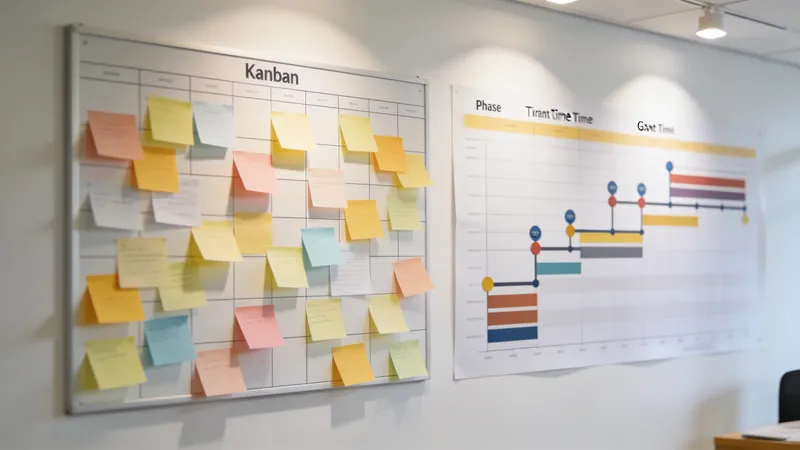
Start by setting the ground rules: it is blameless, everyone speaks, and the goal is improvement. Spend ten minutes recalling the facts, perhaps with a simple timeline on the wall. Then gather observations in silence, with each person writing sticky notes under headings. A popular set is "Start, Stop, Continue." Another is the four Ls: Liked, Learned, Lacked and Longed for. Group the notes into themes and vote on the two or three that matter most. Then spend the remaining time on actions: for each chosen theme, agree on one concrete change, an owner and a date. End by thanking everyone.
Using a neutral facilitator, ideally someone who was not deeply involved, helps keep it honest. And do not skip the actions, because a retrospective without changes is only a conversation.

Plan your closeout backward
Closeout works best when it is planned backward from the project end. Enter your planned end date below to see a sample schedule. It is a template, so adapt the steps to your project.
Different projects, different closeouts
The content of the closeout depends on the type of project.
In construction and fit-out, the as-built documents, warranties, inspection certificates and the final account are the core. The integration of operations before the opening, discussed in how a clinic opens on time, is part of the handover.
In software and digital products, closeout means documentation, a clear support model and a transition from project mode to product mode. The retrospective habit is built into most iterative methods, as described in agile, waterfall or hybrid and shipping SaaS without chaos.
In hospitality openings, such as Comtury Lodge, the soft opening, the first guest feedback and the first weeks of operation are part of the handover from the build team to the operations team.
In exploration and research, closing a phase means writing up what was done and found, in a consistent format, and archiving the data and records so that the next phase and any future partner can rely on them. That is part of how a staged project like Llama Purisima keeps its record in order.
In change projects, closeout includes the reinforcement activities that make the new way stick, as in change management and the people side of projects.
In partnerships, closing may mean transition or exit. Clear terms for what happens at the end, including data, intellectual property and obligations, should be agreed from the start.
A worked example: closing a small fit-out
An invented example shows how little is needed. A team has just finished fitting out a small office for a growing company. Two weeks before the end, the project manager schedules four sessions. The first is a walkthrough with the person who will manage the office, using a punch list with numbered items, owners and dates. Eleven items are left and nine are closed within a week. The remaining two are agreed as warranty items.
The second session is the handover: a folder with the drawings, the manuals for the air conditioning and the lighting controls, the warranty certificates and the contact of each supplier, plus a thirty-minute walkthrough of the systems for the office manager. The third is financial: a checklist of every contractor, confirming final invoices and the date when retention will be released, with one supplier's missing certificate chased the same day.
The fourth is a one-hour retrospective two weeks after the move-in. The team, including the office manager, names three lessons: the electrical contractor should have been booked earlier, the lighting samples should have been approved before the ceiling closed and the weekly photo update to the client was the most appreciated habit. Each lesson becomes a line in the team's standard checklist for the next fit-out, with an owner. The whole closeout takes perhaps twenty hours across the team. It saves far more than that on the next project, and it leaves the client with the memory of a calm ending.
The human side of closing
Do not underestimate the people part. Team members who have worked intensely together often feel a loss when a project ends. Mark the moment. Say thank you specifically, naming what each person contributed. Write references and recommendations for people who did outstanding work. Make sure everyone knows what comes next, including where they will be working. And celebrate honestly: acknowledge what went well and what was hard. People who feel appreciated at the end of a project are far more willing to join the next one.
When a project is stopped early
Not every project reaches its planned end. Sometimes it is wisely stopped: the benefit has disappeared, the risks are too high or priorities have changed. Closing a stopped project well is a sign of maturity. Explain the decision openly, document what was learned, redeploy the people thoughtfully and preserve anything of value. The organization that treats an early stop as an honorable decision, not as a failure to hide, will be more willing to stop projects that should stop, and that frees resources for those that matter.
Make it a habit
Closeout is a skill built through repetition. For your next project, add four lines to the plan: an acceptance review, a handover session, a financial closure check and a lessons session two weeks after launch. Assign owners, hold a small budget for them and keep them even when the schedule gets tight. After two or three projects, you will notice that things start to run more smoothly, because each project builds on the last. That accumulation of learning is a big part of what Project Focus is about: finishing projects properly so that the next ones are easier.
If you would like help designing closeout for a major project, including the handover package and a retrospective that produces action, I do that as part of the operations and owner's representation service, and as part of scaling strategy work with growing companies.
What is the most valuable lesson your team has ever learned, and did it change what you did next? Tell me in the comments.
Frequently asked questions
What is project closeout?
Closeout is the final phase of a project in which the work is formally accepted, handed over, financially and contractually settled, resources are released, benefits are passed to an owner, lessons are captured and the project records are archived.
What should a project handover include?
Documents such as designs, manuals and warranties, contacts for each system or supplier, training for the people who will operate it, a list of open items with owners and dates, and a defined support period after launch.
How do I make lessons learned useful?
Capture them continuously, write each one with what happened, why, what to do differently and who owns the change, put the changes into templates and checklists, and review the most relevant lessons at the start of each new project.
What is a retrospective?
A retrospective is a structured, blameless conversation in which a team reviews how the work went and chooses one or two concrete changes with owners and dates. It can be held at the end of a project or at the end of each phase or cycle.
Join the conversation
Did this help? A quick reaction tells me what to write next.
Be the first to react.

Loading comments…