Risk & Contracts · 11 min read
Contract Risks That Quietly Cost Projects Money (and How to Prevent Them)
Most project disputes start in a contract nobody reread. The clauses, calendars and habits that protect schedule, budget and relationships.
 Dennis AlejoBusiness consultant · Project & operations manager · · 2,355 words
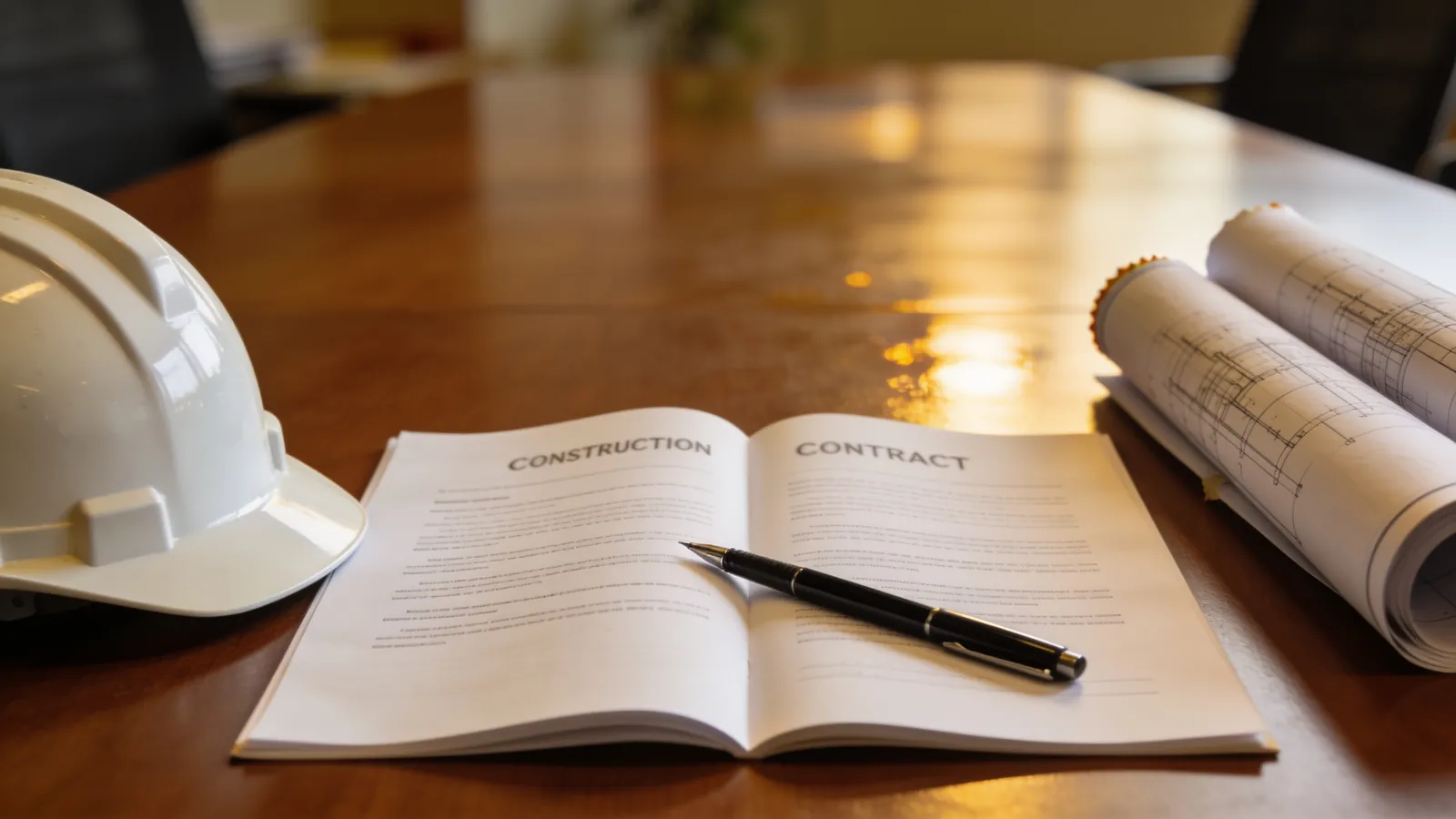
This article is educational and general. It is not legal advice, and contract law varies by country, by industry and by agency. For decisions with legal consequences, work with a qualified lawyer. With that said, there is a lot a project manager can do without being a lawyer, and it makes an enormous difference.
Ask project managers why a project lost money and you will hear about weather, suppliers and bad luck. Look at the paperwork afterward and a different story often appears: a notice that was never sent on time, a change that was agreed over the phone and never written down, a payment milestone that was misread, a scope sentence that two parties understood differently. The contract rarely makes the news, but it quietly decides who pays when something goes sideways.
I spent years as a contract manager on large construction programs, and the most valuable lesson was almost boring: contracts are not paperwork that lives with lawyers. They are the working rules of the project, and the people who run the project day to day need to know them as well as they know the schedule. In this article, I want to share a practical way to do that: the seven places where contracts quietly cost money, a simple system for tracking obligations and the habits that keep relationships healthy while protecting the project.
Why contract management is project management
A contract is the written answer to six questions that every project must answer. What exactly will be delivered? By when? For how much, and when is it paid? To what standard? Who decides when things change? And who carries which risks? Those are the same questions a project plan tries to answer, and in many projects the contract is the only place where they are answered with legal force.
When project managers treat the contract as someone else's job, they manage blind. They may promise a customer something the contract does not require, accept a change without pricing it, or miss a deadline for a claim. Conversely, when they know the contract, they spot risks early, negotiate from a position of clarity and can explain to a sponsor exactly why a decision costs what it costs. This is why contract management is a core part of the operations and owner's representation service that I offer.
Seven places where contracts quietly cost money
Across many types of projects, the same weak points keep appearing. Here they are, with what to look for and a habit that helps.
1. Scope that is vague or inconsistent. Contracts are often made of several documents, such as the agreement, specifications, drawings and proposals, and they may contradict each other. Look for an order of precedence clause that says which document wins. Habit: at the start, read the scope across all documents and write down every ambiguity as a question to clarify in writing before work begins.
2. The change process. Projects change. The contract usually says who may instruct a change, in what form, how it will be priced and how much time the other side has to respond. Habit: never start changed work without the written instruction the contract requires, even if everyone is friendly. Changes agreed verbally are the most common source of disputes about extra payment.
3. Notice and time-bar clauses. Many contracts say that a claim for extra time or money must be notified within a set number of days after the event, or the right is lost. These deadlines are unforgiving. Habit: put every notice period on a calendar and train the site and project teams to recognize triggering events, like an unforeseen condition or an owner's delay, and report them the same day.
4. Payment terms and valuations. How is progress measured? Who certifies it? When is payment due, and what happens if it is late? What is retained until completion? Habit: map the payment cycle and submit documents completely and on time, because incomplete submissions are the quiet cause of cash flow problems.
5. Delay and damages clauses. If the project finishes late, who pays and how much? What counts as an excusable delay that earns an extension? How are delays that overlap handled? Habit: keep a running record of delays with their causes from the day they happen, since reconstructing it later is difficult and contested.
6. Risk allocation. Who bears the risk of unexpected ground conditions, price increases for materials, permit delays, changes in law or force majeure events? Contracts differ widely, and a risk you assumed was the other party's might be yours. Habit: build a short table of the major risks and who carries each, and feed it into your risk register.
7. Closeout, warranties and the final account. The end of the contract has its own rules: acceptance, punch lists, warranty periods, release of retention and the final settlement. Many projects lose money at the very end by delivering on time and then waiting months for the final account because documents were incomplete. Habit: start closeout planning at the beginning, as I describe in project closeout and lessons learned that actually get used.

A note on public works
Contracts with government agencies have particular characteristics worth knowing, with the caveat that the rules differ by country and by entity. They tend to follow a formal process from the selection of the contractor, through execution, to final settlement. Documents are standardized, approvals are formal and additional work often requires a documented authorization before it begins. Mistakes in deadlines or paperwork can be hard to correct later, because the other side is bound by rules and oversight, not only by goodwill.
For a project manager, the practical consequence is that discipline about documentation, dates and formal approvals matters even more. You cannot rely on a friendly conversation to fix a missed deadline, since the person across the table may not have the authority to waive it. That experience is part of why I am working with AlejoCorp on Contract AI Agent, software that aims to guide teams through public works contracts from selection to final settlement and to warn about errors before they cost money. It is in development, and I mention it as an illustration of how seriously the problem deserves to be treated, not as a substitute for professional advice.
Build a contract calendar
If you take away only one practical tool, make it this: a contract calendar. Go through the contract and extract every date, period and deliverable into a single list. Include milestone dates, payment submission dates, notice periods, insurance renewals, report deadlines, warranty expiry and option dates. For each item, write the trigger, the deadline, the responsible person and the action required. Then put it into the calendar the team already uses, with reminders.
It takes a few hours at the start of a project and saves weeks later. And it changes behavior: when the whole team can see that a notice is due in five days, the question "who is sending this?" gets asked in time. The next tool lets you check how well your current contract management is set up. Tick only what is true today.
Read it like a project manager
Few people read a contract cover to cover, and fewer read it with a project in mind. A three-pass approach works well.
On the first pass, skim for the map: what is in each section, what documents are attached, how the contract is structured. You are building a mental table of contents.
On the second pass, read for obligations and risks. Highlight every sentence that says someone "shall," "must" or "is responsible for." Mark every number: dates, amounts, percentages, days. Build the contract calendar and the risk table as you go.
On the third pass, test it with "what if" scenarios. What if the owner is late approving a design? What if the price of steel rises? What if we find something unexpected underground? Find the clauses that answer each question and note whether the answer is clear.
The output is a single page, a "contract on a page," listing the scope in a sentence, the key dates, the payment terms, the change process, the main risks and who owns what. Share it with the team. Most of the people who deliver the project will never read the full contract, and that one page is how the contract reaches them.
Keep a paper trail
When a dispute arises, the side with the clearer record usually has the stronger position. Build the habit of writing things down quickly. After any meeting that includes a decision or an instruction, send a short written summary within a day or two: "Confirming what we agreed today..." If the other party does not object, you have a record. Keep daily logs of work, delays and conditions, and photographs with dates. Use consistent naming for correspondence so that anything can be found in minutes.

The tone matters too. A paper trail is not a weapon. Writing "Thank you for the call. To confirm, you asked us to move the delivery to Friday, which adds two days to the schedule" is polite, clear and protective. The goal is that nobody is surprised later.
Relationships and clauses work together
There is a false choice in some discussions: either you trust your counterpart, or you rely on the contract. In practice the best projects do both. Good relationships make small problems easy to solve with a phone call. Good paper makes sure that when a larger problem arrives, the conversation is about facts. Teams that have a strong relationship are, if anything, more disciplined about documentation, because they know that written clarity protects the friendship.
Different cultures put the balance in different places, and I find the comparison fascinating enough that it is part of a book I am developing about how Japanese and American organizations manage projects. You can read the idea on the page for Kaizen vs. Gantt. For now, the practical advice is to start every contract with a kickoff conversation among everyone who will carry it out: both sides, the people who sold it and the people who will deliver it. Walk through the scope, the dates and the change process together, and agree how you will communicate. An hour spent this way often prevents months of disagreement.
Different projects, different contract risks
The pricing model changes where risk sits. In a fixed-price contract, the contractor carries cost risk, so unclear scope hurts them and change control protects them. In a unit-price contract, quantities matter, so measurement and verification dominate. In a cost-plus arrangement, the owner carries cost risk and needs strong oversight. Understanding which model you have tells you where to look first.
The type of project matters too. In construction, the heavy hitters are ground conditions, change orders and payment. In software, they are scope definition and acceptance criteria. In imports and equipment supply, such as the work behind Titan Heavy Imports, the delivery terms (who pays for shipping and bears the risk at each point), the payment schedule and the inspection rights are central. In partnerships and project investments, structures like options, earn-in agreements and staged payments tie money to milestones. That staged logic is visible in how a project like Llama Purisima is organized, with decisions after each phase.
And in every case, controlling scope after signing is a contract skill as much as a management skill, which is why I wrote a separate guide on how to stop scope creep.
When something goes wrong: climb the ladder one rung at a time
Even well-managed contracts hit disagreements. What matters is how you respond, and a simple ladder keeps emotions out of it.
The first rung is facts. Before you say anything, gather the record: what the contract says, what was instructed, what happened and when. Half of all disagreements shrink when both sides look at the same documents.
The second rung is a conversation. Call the person on the other side, describe the facts and ask how they see it. Most issues are solved here, and a respectful call preserves goodwill.
The third rung is a formal notice, sent exactly as the contract requires and within its deadline. Sending a notice is not an act of war. It protects your rights while the conversation continues, and a good counterpart understands that.
The fourth rung is structured negotiation, with senior people and, if the contract allows, a neutral facilitator or mediator. The fifth and last rung is the formal dispute process written into the contract, which is slow and expensive for everyone. The teams that stay off the last rung are not the ones who never disagree. They are the ones that move quickly through the first three, with clean records and calm tone.
A short pre-signature checklist
Before signing anything, run through these questions with the whole team and, where it matters, with your lawyer.
- Can we describe the scope in one sentence that both parties agree on?
- Which document wins if two documents disagree?
- Who can instruct changes, in what form, and how are they priced?
- What are all the notice periods and deadlines, and who owns each?
- How is progress measured, certified and paid, and when?
- What happens if either side is late?
- Who carries the major risks, and does the price reflect that?
- How does the contract end, and what must be delivered for the final payment?
If you cannot answer one of these, you have found a question to ask before you sign, when you still have negotiating power.
Contracts will never be the most exciting part of a project. But the teams that understand them, track their obligations and write things down are the ones that finish with their margins and their relationships intact. If you want a second pair of eyes on how your projects handle contracts, I work on this in the operations and owner's representation and business partnerships services, and Project Focus gives the weekly rhythm to keep it alive.
What is the clause or deadline that surprised you most in a past project? Tell me in the comments.
Frequently asked questions
Why is contract management part of project management?
Because the contract defines scope, schedule, price, quality, change rules and risk allocation. A project manager who does not know it cannot manage those things well and may promise, accept or miss things with financial consequences.
What are the most common contract mistakes in projects?
Vague scope, changes made without the required written instruction, missed notice deadlines, incomplete payment submissions, poor records of delays and weak closeout planning. All are preventable with a contract calendar and a paper trail.
What is a contract calendar?
It is a single list of every date, notice period and deliverable in a contract, each with a trigger, a deadline, an owner and an action, loaded into the team's calendar with reminders so that obligations are never missed.
Is this article legal advice?
No. It is general education about project and contract management. Contract law differs by country and agency, so confirm important decisions with a qualified lawyer.
Join the conversation
Did this help? A quick reaction tells me what to write next.
Be the first to react.




Loading comments…