Construction · 12 min read
The Critical Path Method, Explained With a Storage Building and a Pencil
Find the one chain of tasks that sets your finish date: a worked example with forward and backward passes, float and a calculator you can change.
 Dennis AlejoBusiness consultant · Project & operations manager · · 2,592 words
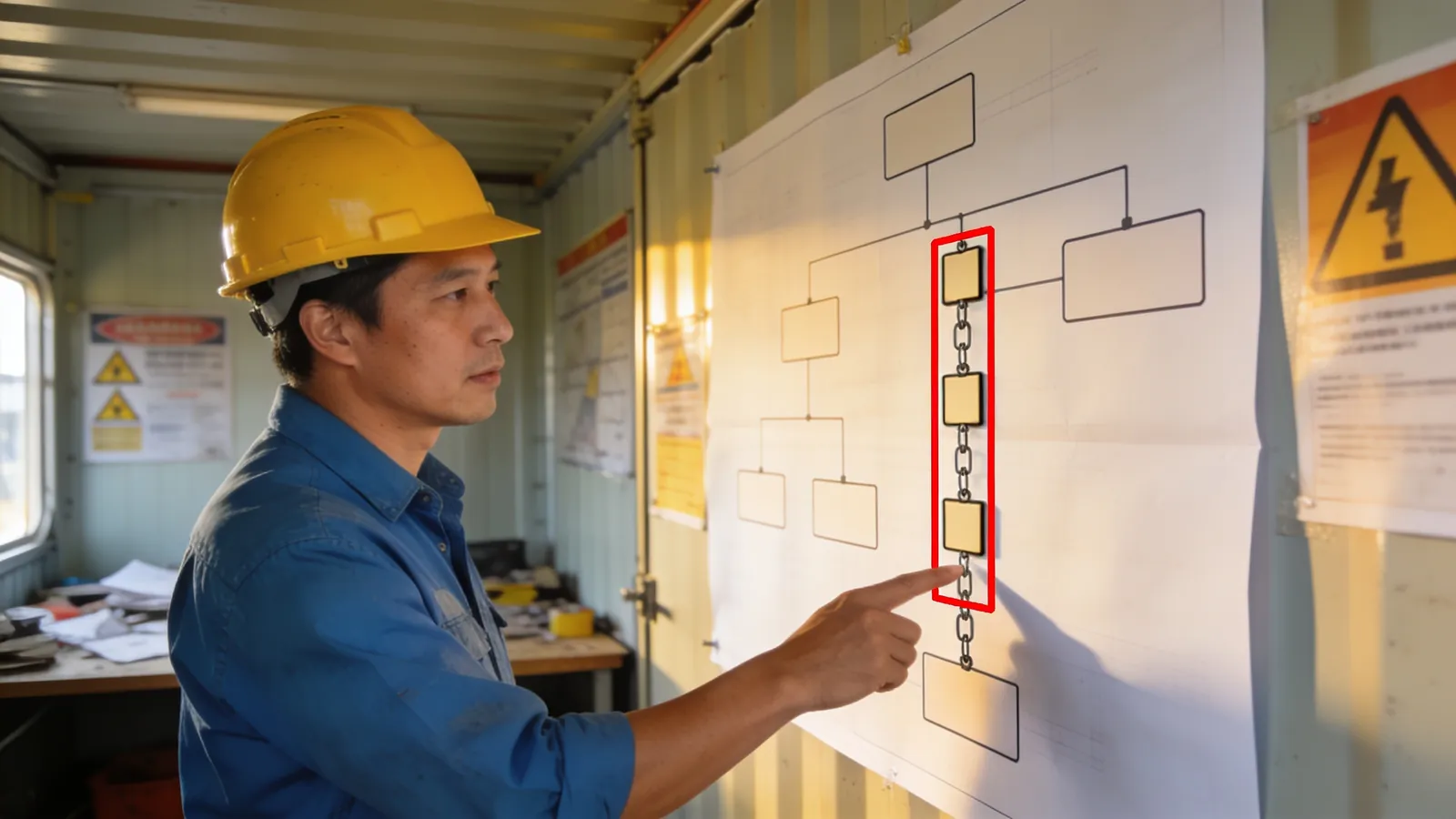
There is one part of every project schedule that has no sense of humor. It does not care about your excuses, your optimism or the fact that the supplier "promised." It is called the critical path, and in a typical project it is only a small fraction of the tasks. The rest are free spirits who can wander a few days without consequence. This one cannot. If it slips, the finish date slips with it, to the day, no appeals.
Learning to see this chain changes how you run a project. Before, every task looks urgent and everyone is a little bit stressed all the time. After, you can say with a straight face: "These eight tasks decide the date. These other six are safe for a few days. Let's go and look after the eight." It is one of the most useful ideas in project management, and it is much simpler than the acronym makes it sound.
I first learned it on the construction side, where the sequence is not a matter of opinion: you cannot put up walls before the foundation has cured, however enthusiastic the walls are. In this article I will explain the critical path method (CPM) with a small worked example you can follow with a pencil, then show how to use it on projects that have nothing to do with concrete, and at the end you can try it yourself in a tool right on the page.
What the critical path actually is
A project is a set of tasks. Some tasks cannot start until others finish. That is called a dependency, and it is the reason a schedule is not just a list.
If you draw the tasks as boxes and the dependencies as arrows, you get a network. Every route through that network from the start to the end has a total length: add up the durations of the tasks on that route. The critical path is the longest route. It is called critical because it is the one with no room: the length of the longest route is the shortest possible duration of the entire project.
Two things follow from that, and both surprise people the first time.
First, a project can have a long list of tasks and a short critical path, or the other way around. What matters is not how many tasks there are but how many of them have to happen one after another.
Second, being critical has nothing to do with being important. Choosing the paint color may matter enormously to the owner and still be off the critical path, if there are three weeks of other work ahead of it. Pouring concrete may look humble in a spreadsheet and still be critical. The path is about time, not about prestige.
An everyday way to picture it: you are making a dinner. The roast takes two hours, the potatoes forty minutes, the salad ten. If you want everything on the table at the same moment, the roast decides when you start, and everything else is scheduled backward from it. You can chat during the salad. You cannot chat during the roast. The roast is your critical path.
A worked example: a small storage building
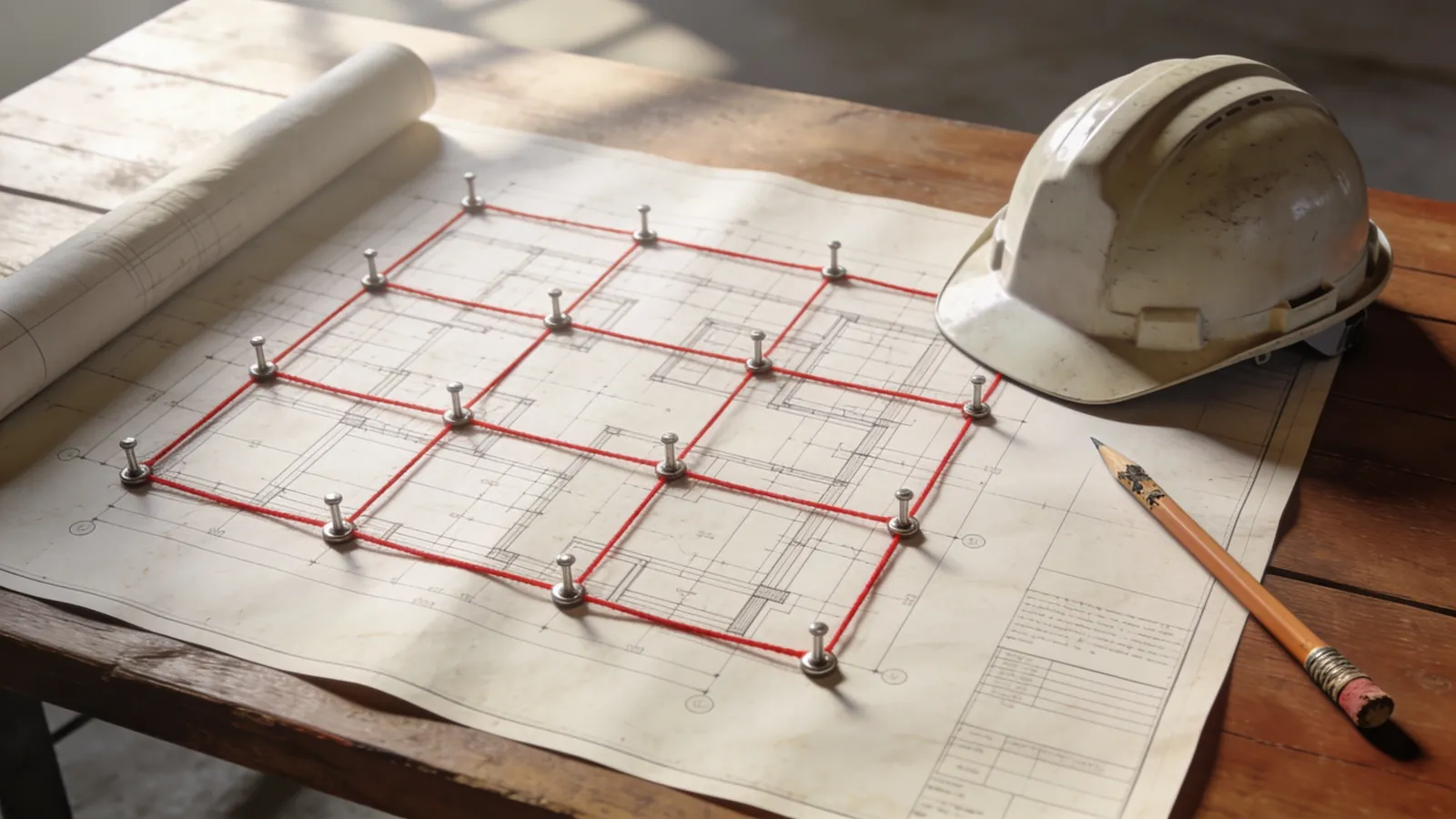
Let me use a simple project you can hold in your head: a small storage building. Ten tasks, a few dependencies, and numbers that are illustrative, not from any real job.
- A. Site preparation and excavation: 3 days, no predecessors.
- B. Foundation forms and rebar: 4 days, after A.
- C. Pour the foundation: 1 day, after B.
- D. Concrete cure: 7 days, after C. The chemistry sets the pace, and only a special mix can speed it up.
- E. Order and receive the steel frame and wall panels: 12 days, no predecessors, because the order can go in on day one.
- F. Erect the frame and walls: 5 days, after D and E. Both the cured foundation and the delivered frame are needed.
- G. Roof: 3 days, after F.
- H. Electrical rough-in: 4 days, after F.
- I. Interior finishes: 5 days, after G and H.
- J. Final inspection: 1 day, after I.
Without any method, many people would add all the durations and say "this takes 45 days." That is the most common mistake in scheduling. Some tasks happen at the same time, and the total is not the sum, it is the longest chain.
Step 1: the forward pass
Start at the beginning and ask, for each task, "what is the earliest this can start?" The answer is the latest finish of everything it depends on. Then add the duration to get the earliest finish. Days are counted from the start of the project, so a task with 3 days that starts at day 0 finishes at day 3.
- A: starts day 0, finishes day 3.
- B: starts day 3, finishes day 7.
- C: starts day 7, finishes day 8.
- D: starts day 8, finishes day 15.
- E: starts day 0, finishes day 12 (it only depends on placing the order).
- F: depends on D (day 15) and E (day 12), so it starts at the later one, day 15, and finishes day 20.
- G: starts day 20, finishes day 23.
- H: starts day 20, finishes day 24.
- I: depends on G (day 23) and H (day 24), so it starts at day 24 and finishes day 29.
- J: starts day 29, finishes day 30.
The project takes 30 days, not 45. The overlap between tasks (the frame is ordered while the foundation is being built, and the roof and electrical happen together) saved fifteen days without anyone working faster.
Step 2: the backward pass
Now go from the end. Ask, "what is the latest this task can finish without delaying the project?" Start with day 30 for the last task, subtract each duration to get the latest start, and pass that date back to the tasks that come before.
- J: latest finish day 30, latest start day 29.
- I: latest finish day 29, latest start day 24.
- G: must finish by day 24 (when I must start), so latest start is day 21.
- H: must finish by day 24, so latest start is day 20.
- F: has to finish before both G (latest start 21) and H (latest start 20), so its latest finish is day 20 and its latest start is day 15.
- D: latest finish day 15, latest start day 8.
- E: latest finish day 15, since F cannot start later than day 15, so its latest start is day 3.
- C, B and A are tight in the same way: no room anywhere.
Step 3: the float
Float is the latest start minus the earliest start. Look at each task:
- A, B, C, D, F, H, I and J all have zero float. Their earliest and latest dates are the same. These eight tasks are the critical path: A → B → C → D → F → H → I → J.
- E, the steel order, has 3 days of float. It could start as late as day 3 and still arrive by day 15. Though it takes the longest of any single task, it is not critical.
- G, the roof, has 1 day of float. It can finish a day late because electrical work takes longer anyway.
Read that once more, because it is the interesting part. The task that takes 12 days is not on the path. The task that takes 1 day, the foundation pour, is. And the electrical rough-in, which sounds less important than the roof, controls the finish. If the electrician is two days late, the building is two days late. If the roofers are two days late, it is late by one, because they used up their single day of float.
Here is the practical translation: where you spend your management attention should follow the float, not the noise. The eight critical tasks get the daily check, the backup supplier and the phone call. The two tasks with float get a weekly look.
What the method is good for
Knowing the critical path gives you five practical tools.
1. It tells you where speeding up works
Suppose the owner asks, "Can you finish in 27 days?" Where do you start? Not with the steel delivery (it has float) and not with the roof (it has 1 day, and the electrical work still holds the finish). You look at the critical tasks and ask which can be shortened. Could the foundation be formed faster with a second crew? Could the electrician bring a helper? Could high-early-strength concrete shorten the cure? Each day taken off a critical task takes a day off the project, until another path becomes critical. That brings us to the next point.
2. It shows you when the path will move
Shorten the electrical work by 3 days, and the project does not become 3 days shorter. Electrical now ends at day 21, but the roof still ends at day 23, so the roof becomes the controlling task, and the project finishes at day 29, one day shorter. The path moved. This is why you recheck after every big change, and why CPM is a living tool, not a poster.
3. It makes float visible, and float is your insurance
A schedule with no float anywhere is a schedule that works only if nothing goes wrong. In practice every task has some chance of slipping, and when most tasks are critical a small problem in any of them becomes a delay. I discuss this in the Gantt chart guide: a chart that shows the critical path and the float is worth ten that only show bars.
4. It gives a better conversation with the owner
"We are 5% behind" tells an owner nothing. "The electrical rough-in is two days behind and it is on the critical path, so the handover moves two days unless we add a second crew for three days" is something they can decide on. The method turns an argument about feelings into a decision about options. It is part of the habit I describe in what an owner's representative does: turning noise into a question someone can answer.
5. It tells you what to protect
The long-lead items, the permits and the inspections are the usual suspects. If they are on or near the critical path, they deserve an owner, a date and a backup plan. If they are far from it, they can wait for the next weekly meeting. The same logic works for risks: a risk that touches the critical path is worth more of your attention than one that does not.
It is not only for concrete
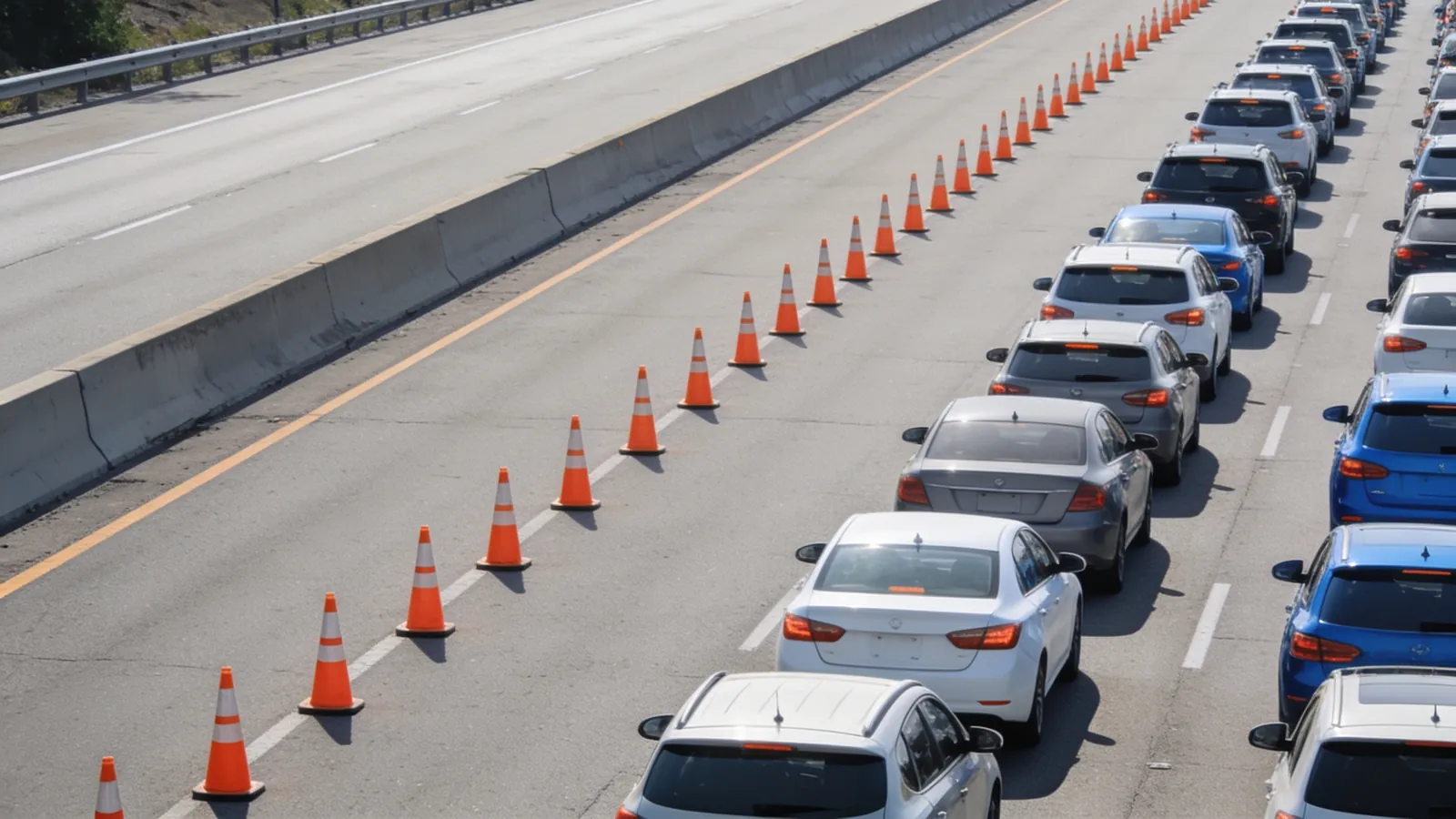
You do not need a crane to use CPM. The same logic applies whenever tasks depend on each other:
- Launching a website: copy, design, development, testing. Writing the copy often controls the date, because everything waits for it.
- Opening a clinic or a restaurant: permits, equipment delivery, staff hiring and training. Hiring and training are often the real critical path, not the building, as the clinic opening article shows.
- Moving an office: the lease, the internet installation, the furniture and the move itself. Internet installation has caused more delayed moves than any truck.
- Writing a book, planning an event or running a hiring process: all have chains and side tasks.
If you run a small business, here is a tiny version you can do in ten minutes on paper: list the tasks of your next project, write the number of days next to each and draw an arrow from each task to anything that cannot start until it finishes. Then trace the longest chain. That chain is the one to protect, and you will probably be surprised by which task is on it.
Limits, honesty and common mistakes
CPM is a model, and a model is only as honest as the numbers going in. These are the usual traps.
- Fantasy durations. If every task is estimated optimistically, the critical path is optimistic too. Ask the person who will do the work, and ask what usually goes wrong.
- Missing dependencies. The path you computed is only the path you remembered. Walk the chart with the team and ask, "what is each of you waiting for?" The answers are almost always missing arrows.
- Resource limits. CPM assumes people and machines are available. If the same crew is needed for two parallel tasks, the "parallel" tasks become a chain. That is a limit of the basic method, and the capacity planning article explains why.
- No buffer on purpose. Some teams hide padding inside every task, which is invisible and gets consumed. A better approach is a visible buffer at the end of the path, so everyone can see how much is left.
- Computing once and filing it. The path moves. Update it with real progress every week, ideally with remaining days rather than percent done.
- Believing the tool over the site. Software will calculate a path to the decimal. Humans still have to say whether the numbers make sense.
None of these makes the method useless. They make it a conversation tool rather than a prediction machine, which is exactly what it should be.
Try it yourself
The tool below is a small CPM calculator loaded with the storage building from this article. Change any duration and the table recalculates the earliest and latest dates, the float of every task and the critical path. Try these experiments:
- Make the steel order 18 days instead of 12. Watch it jump onto the critical path and push the finish out.
- Reduce the roof from 3 days to 1. Does the project finish any sooner?
- Shorten the concrete cure to 3 days, as if you paid for a faster-curing mix, then see which task takes the critical role instead.
Each experiment teaches the same lesson: only the tasks on the path move the finish date, and the path itself moves as soon as you change it.
What to do this week
Pick one real project and one page of paper. List the tasks with the number of days, write which ones each one waits for, and trace the longest chain. Circle it in red. Then ask the owner of each circled task one question: "What would make you late, and what are you doing about it?" If you cannot answer it for the red tasks, that is today's work.
If you are planning a building or a renovation and want someone on your side who reads schedules the way this article describes, that is part of my work as an owner's representative and project manager. You can see how a construction job is put together in project management in construction: a practical guide, or follow the weekly series, construction project management from a civil engineer's desk, which covers the schedule in a later part. When you are ready, you can describe your project on the contact page.
Which task has been secretly controlling the date of your current project: a permit, a delivery, a decision or a person? Tell me in the comments.
Keep reading. To see how a visual schedule can hide the path, read the Gantt chart guide. To keep scope from adding new tasks to your chain, read how to stop scope creep.
Frequently asked questions
What is the critical path method in simple terms?
It is a way to find the longest chain of dependent tasks in a project. That chain sets the shortest possible duration, and any delay on it delays the finish date. Tasks off the chain have float, meaning they can slip a little without affecting the end.
What is float or slack in a schedule?
Float is the number of days a task can be delayed without delaying the project finish. It is calculated as the latest start minus the earliest start. A task with zero float is on the critical path.
Can a project have more than one critical path?
Yes. When two or more chains have the same total length, both are critical, and the schedule is more fragile because a delay on either one delays the finish. Projects can also change which path is critical as tasks finish early or late.
How do you shorten a project using the critical path?
Shorten tasks on the critical path, for example by adding resources, changing the method or starting something earlier in parallel. Shortening a task that is not on the path does not make the project finish sooner. After each change, recalculate, because another path can become critical.
Monthly newsletter
Everything new, once a month.
One email on the 1st of every month with everything new: articles, series parts, news, website updates, project results, where I am working and the business opportunities I am looking at. No spam.
Join the conversation
Did this help? A quick reaction tells me what to write next.
Be the first to react.

Loading comments…