Construction · 10 min read
Construction Project Management, Part 1: What a Construction Project Is Really Made Of
Part 1 of a weekly series from a civil engineer's desk: the five flows that every building project is made of, where each one clogs and how to control it.
 Dennis AlejoBusiness consultant · Project & operations manager · · 2,205 words
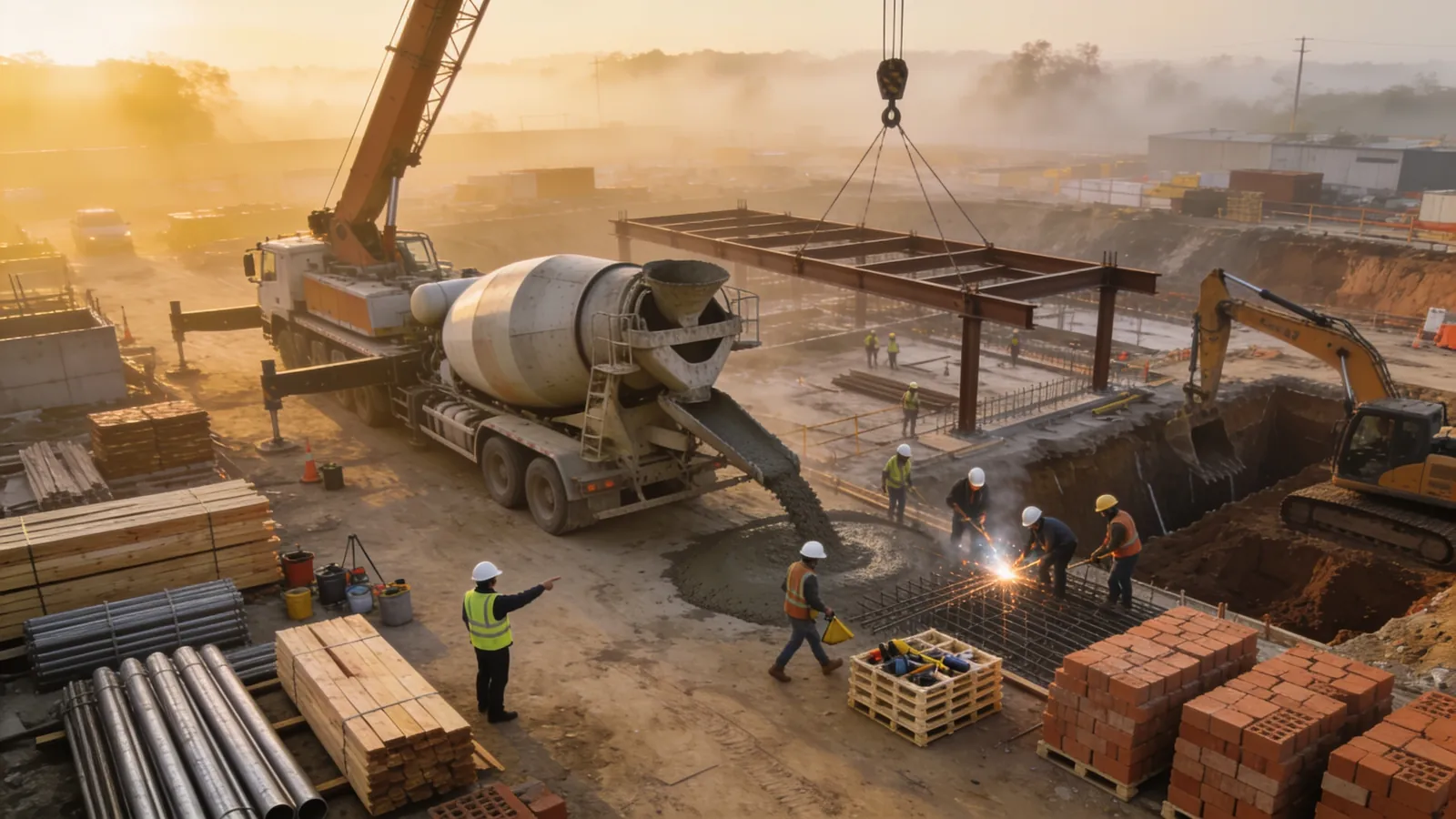
Ask a passerby what a construction project is made of, and the answer arrives instantly: concrete, steel, glass, maybe a crane for flavor. Ask a civil engineer on day three of a job, and the answer is less poetic: mostly paper, phone calls and waiting. Waiting for a drawing. Waiting for a delivery. Waiting for a signature from someone who is, according to their assistant, "in a meeting until further notice."
Both answers are right. The building is the visible tip of an iceberg, and the iceberg is made of information, money, decisions and people, all trying to arrive at the same place at the same time. A building site is, at its heart, a very expensive meeting point.
I learned this as a young civil engineer on public road projects in Peru, where my work included measurements, valuations and supervision. I noticed early that the earth moved only when something else had moved first: a plan had been approved, a quantity had been agreed, a payment had arrived, a machine had been repaired. The road was the last thing we built. First we built agreement.
This is the first article of a weekly series I call construction project management from a civil engineer's desk, with a new part every Friday. Today I want to give you one simple picture that makes the rest of the series easy to follow: the five flows that every construction project is made of. In the middle, there is a small tool to find which of the five is clogging your project.
The iceberg and the train station
Two images help here.
The first is the iceberg. On the surface, a site: cranes, trucks, noise, people in hard hats. Underneath, most of the work: the questions, the approvals, the purchase orders, the cost reports, the sequence planning, the coordination between trades. If you only manage what you see on the surface, you will be consistently surprised by what you could not see.
The second is a train station. Picture a very busy station where five different trains must arrive in the right order, at the right platform, on time, or the whole schedule falls apart. The trains are the flows. The platform is the site. The project manager is the dispatcher who has to know where each train is, which one is late and which one will block the others. That sounds stressful, and it is. It also becomes a lot more manageable once you can name the trains.
The five flows
1. Information: the paper river
Drawings, specifications, schedules, questions, answers, decisions and the thousand small clarifications that turn a design into a building. Information flows between the owner, the designer, the builder and the suppliers, and the project advances at exactly the speed at which questions get answered.
Where it clogs: unanswered questions. A builder asks the designer whether a wall can be moved, the question goes into an inbox, and for three weeks a crew works around a hole in the plan. Everybody is busy. Nothing is wrong. Everything is late.
The control: a log of questions and submittals with one owner and one due date for each. Not a pile of emails: a list. If a question is older than a week, someone should be able to explain why.
2. Money: the river that keeps everything alive
The budget, the contract value, the monthly payment requests, the money held back until the work is complete, the changes that add cost and the forecast of what the whole thing will cost in the end. Money is the oxygen of a construction project. If it stops, the crews stop, then the suppliers stop, then the schedule becomes a work of fiction.
Where it clogs: in the gap between work done and work billed, and between work billed and money paid. Contractors who are paid late slow down. Owners who are billed for work not yet done lose their leverage. A surprising number of disputes begin with a simple question nobody asked: "How much of this is actually built?"
The control: a monthly forecast of cost at completion, compared with progress. I explain the idea in earned value in plain English. Add a running list of pending changes with prices, so the forecast includes them before they are approved, not after.
3. Materials: the river with a delivery truck
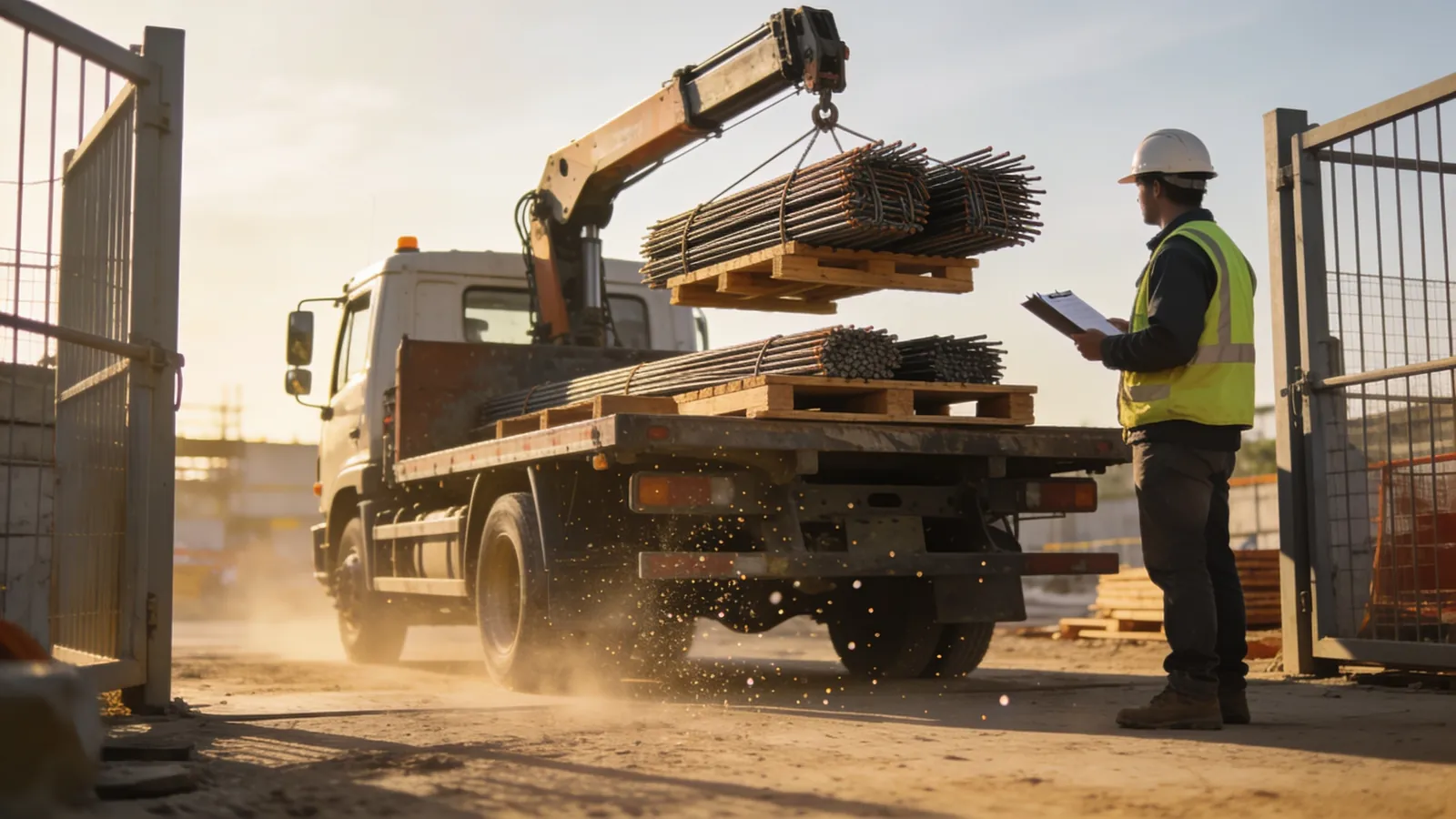
Everything the building is physically made of, plus the equipment that goes into it: concrete, steel, windows, pipes, switchgear, elevators and a long list of items with odd names that take months to arrive. Materials have to be ordered, made, shipped, received, stored and installed in the correct sequence.
Where it clogs: the long-lead item. The one piece of equipment that takes five months to arrive and that somebody forgot to order in month one. Crews can build around many things. They cannot build around a missing transformer, however confidently the schedule shows it arriving "on site, day 90."
The control: work backward from the date you need each item, subtract the manufacturing and shipping time and write down the date by which it must be ordered. Treat that order date as a milestone as important as the pouring of the foundation.
4. People: the crews and the choreography
The trades, the supervisors, the specialists, the inspectors, the owner's staff, and the order in which they enter and leave each part of the building. Construction is a choreography in which the concrete crew must leave before the electricians arrive, who must leave before the painters begin. Everyone is skilled. Nobody wants to be told they have to wait.
Where it clogs: the crowded room and the empty room. Two trades trying to work in the same space, or a crew that arrives on Monday to an area that is not ready and is paid to watch. Both are painful, and both are invisible on a bar chart.
The control: a weekly look-ahead with the people who do the work. Thirty minutes, three weeks forward, three questions per activity: what do you need to start, what are you leaving behind for the next trade, and what could collide with someone else? I describe the habit in what a construction site can teach your startup about deadlines, and a good way to read the master schedule is in the Gantt chart guide.
5. Approvals: the river with a gate
Permits, inspections, owner decisions, sign-offs by designers and by authorities. Approvals are the gates the other four flows must pass through. Nothing is built until the permit is granted. Nothing is occupied until the inspector signs.
Where it clogs: waiting. The permit that takes longer than anyone said. The owner decision that sits on a desk for ten days. The inspection that cannot happen because the work is not ready. Approvals have a peculiar quality: they cost nothing to give and everything to wait for.
The control: a calendar of decisions and approvals, with the date each one is needed, who gives it and how long it usually takes. I wrote about the owner's side of this in what an owner's representative is, and a RACI chart helps make sure each approval has one name next to it.
A field guide to a clogged flow
You do not need a dashboard to find a clog. You need your ears. Each flow has a sentence it produces when it is in trouble, and after a few projects you will recognize them from across the site.
- Information: "Didn't we already ask that?" If the same question appears in three consecutive meetings, the answer is stuck somewhere between a desk and an inbox.
- Money: "How much of this is actually built?" When nobody can answer in under a minute, the invoice and the reality have started to drift apart.
- Materials: "Can we expedite it?" The word expedite appearing more than twice a week is a sign that an order date was missed some time ago, and the project is now paying for the privilege of catching up.
- People: "Who has the ladder?" Two crews, one ladder and a bad mood. It is funny until it happens at the critical moment.
- Approvals: "We are waiting for…" If this is the most common sentence of the progress meeting, you have found your slowest flow, and it probably has a person's name attached.
Listen for these for one week, and you will have a better map of your project than most dashboards give.
How the flows talk to each other
The reason the five flows matter is that they are connected, and a delay in one travels to the others like a rumor in a small town.
- Late information delays the order of materials (you cannot buy what is not specified), which delays the crews, which delays the work, which delays the money.
- Late approvals delay information (the design cannot be finalized without the owner's decision), and sometimes the whole schedule.
- Late money slows the materials and the crews, which turns a financial hiccup into a schedule problem.
- A crowded site raises safety risks and reduces quality, which creates rework, which consumes money and time again.
A construction project is a system, and a system moves at the speed of its slowest flow at the moment. The tricky part is that the slowest flow changes. In the first months, approvals and information usually set the pace. Then materials. Then people. Near the end, approvals again, with inspections and handover. A good manager keeps asking one question every week: "Which flow is slowest right now?" That question alone points you to where to spend your attention, and it is cheaper than any software.
A small, imaginary example
Let me illustrate with a made-up story, so nobody's real project gets embarrassed. A small clinic is being built in a leased suite. The builder finishes the exam room two weeks early. Triumph! The owner is delighted. Then the equipment, ordered late, arrives six weeks after the room is done. The room sits empty. Meanwhile, the staff are hired and start training in a room with no equipment. The owner pays salaries for people practicing on imaginary patients.
Which flow clogged? Materials, because of a late order. But the real cause was in the information and approval flows: the owner's decision about the equipment model was made late, which delayed the specification, which delayed the order. The building did its part. The paper did not. This is the kind of story that repeats on projects of every size, and it is why I wrote how a clinic opens on time: the building is only half the project.
Find your clog
Use the tool below to sketch your own project. Rate how much each flow matters in your project and how worried you are about it, from one to five. The score ranks them. It is a conversation starter, not a diagnosis: the flow at the top is where I would look first. Replace the sample numbers with your own.
Who owns which flow
One more useful thing about the five flows is that they have natural owners, and the trouble starts when nobody has taken one.
- Information is mostly owned by the designer, with the builder asking and the owner deciding.
- Money is owned by the owner and the builder, with the owner's representative checking.
- Materials are owned by the builder and its suppliers, with the owner watching the long-lead items.
- People are owned by the builder, with the owner responsible for access and decisions.
- Approvals belong to the owner and the authorities.
When a project is in trouble, I often find that one flow has no owner at all, usually approvals, since everyone assumes they belong to someone else. Naming an owner for each flow is a ten-minute exercise that pays for itself, and it connects directly to the pillar article, project management in construction: a practical guide, where I walk through the phases and the team.
What to do this week
Take a sheet of paper and draw five horizontal lines, one for each flow. At the end of each line, write the one thing that is waiting right now: the unanswered question, the unpaid invoice, the undelivered item, the crowded room, the pending approval. Write a name and a date next to each. If you cannot name what is waiting, ask your team. They know. They have been waiting.
If you are building and would like someone on your side who thinks in flows, that is part of my work as a project manager and owner's representative, and you can tell me about your project on the contact page.
What comes next in the series
Over the following Fridays, the series goes deeper: the owner's representative, contracts, notices and change orders, the schedule and the three-week look-ahead, cost control, quality and rework, and the handover. The series page lists every part, and the publishing calendar shows the dates. Next Friday: the owner's representative, protecting the owner's interest.
Which flow is clogged on the project you are thinking about right now: information, money, materials, people or approvals? Tell me in the comments.
More tools. The contract calendar, the risk register and the change request log are free in the toolkit.
Frequently asked questions
What is a construction project made of?
Beyond the physical materials, a construction project is made of five flows that move at once: information (drawings, questions and decisions), money (budget, payments and changes), materials (orders, deliveries and storage), people (crews, trades and inspectors) and approvals (permits, inspections and owner decisions). The building is where they meet.
Why do construction projects run late?
Most delays begin in one of the flows and travel to the others. Common causes are unanswered questions, late owner decisions, long-lead items ordered too late, payment disputes and crowded work areas. The project moves at the speed of its slowest flow, and that changes during the project.
What is a long-lead item?
A long-lead item is a product or piece of equipment that takes a long time to manufacture and deliver, such as switchgear, elevators or special windows. It should be identified during design and ordered early, because the building cannot be finished without it.
How can I find the biggest risk to my construction schedule?
Ask every week which flow is slowest right now: information, money, materials, people or approvals. Then write the one thing waiting in each flow, with a name and a date. The one with the oldest waiting item is usually where the next delay begins.
Monthly newsletter
Everything new, once a month.
One email on the 1st of every month with everything new: articles, series parts, news, website updates, project results, where I am working and the business opportunities I am looking at. No spam.
Join the conversation
Did this help? A quick reaction tells me what to write next.
Be the first to react.



Loading comments…