News · 6 min read
PMI Global Summit opens in Detroit: what "Built to Move" and a new AI standard mean for project managers
PMI's Global Summit is under way in Detroit with AI first on the agenda. What PMI's new AI standard says, and five habits for small teams to start this month.
 Dennis AlejoBusiness consultant · Project & operations manager · · 1,333 words
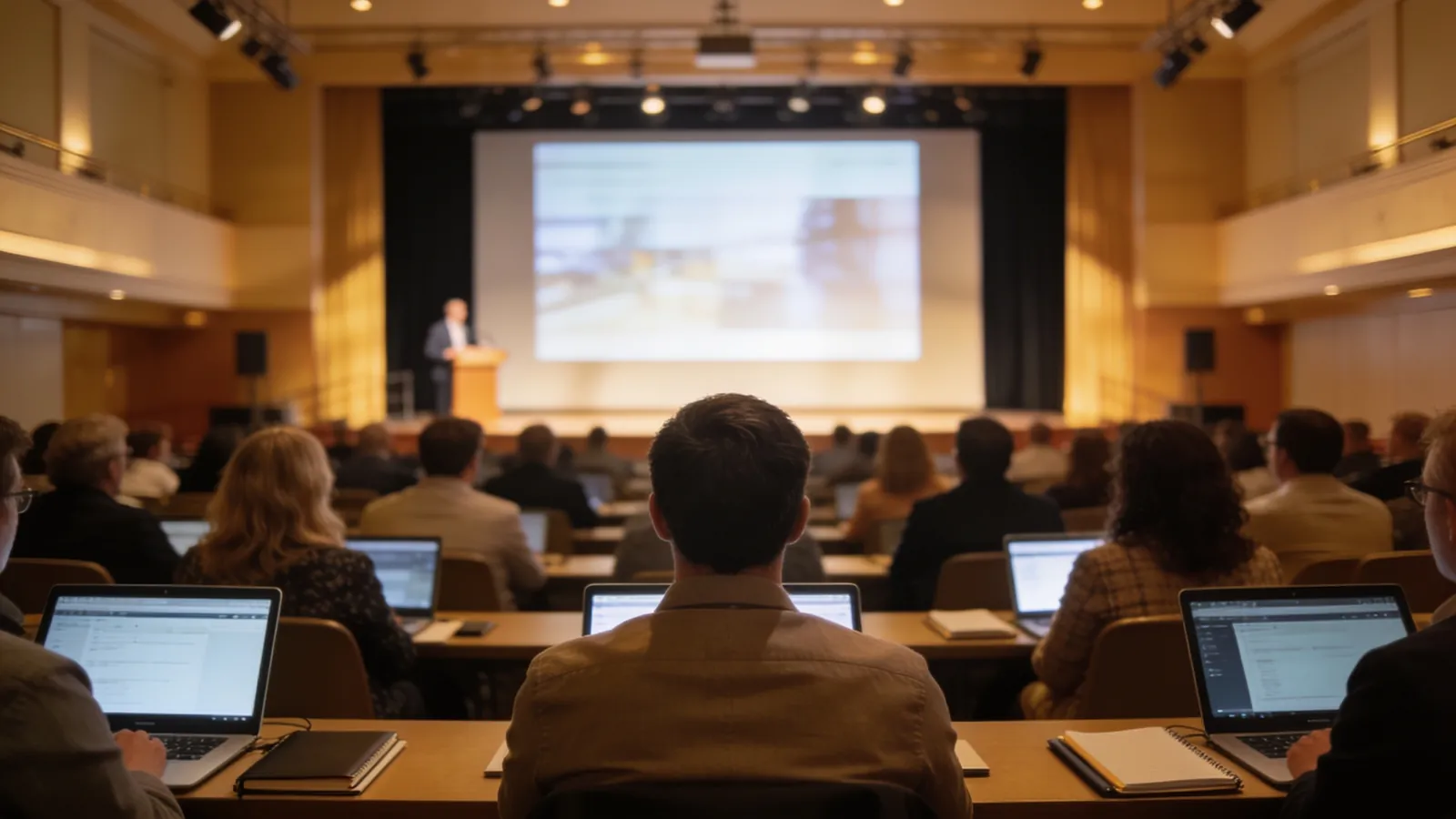
Every year the Project Management Institute gathers its community in one place and tells the profession what it thinks matters next. This year the place is Detroit, the dates are October 21 to 24, and the theme is "Built to Move." According to PMI, the Global Summit is the largest in-person event of the year for project professionals, and the list of topics it highlights begins with artificial intelligence, followed by agile and hybrid ways of working and trends and innovation. Its event page promises future-ready skills in AI, technology and leadership.
I am not in Detroit, so I cannot tell you what was said on stage. What I can do is read what PMI has put in writing and ask what it means for people who run projects without a conference budget: owners of small businesses, project managers in clinics and construction, and teams that are being asked to use AI by next Monday. I will say clearly where I am reporting a fact and where I am giving my own reading.
What happened this week
The headline is the Summit itself: four days, an in-person gathering and a theme about staying agile as change speeds up. The detail that matters for this post is the order of the agenda. PMI puts AI first. That is not a surprise to anyone who has watched how fast AI tools have entered everyday office work, but it is a signal about where the largest professional body in the field believes the center of gravity is moving.
The second piece of news is older and probably more important. On June 9, 2026, PMI released a standard on the subject, and the Summit is where the profession is now discussing it.
The standard behind the headline
PMI calls it The Standard for Artificial Intelligence in Portfolio, Program, and Project Management and describes it as the first global standard of its kind for applying AI in project work. Here are the facts as PMI and trade coverage describe them.
- Length and structure. It runs 275 pages. It sets out eight guiding principles, five performance domains and a life-cycle framework for designing, deploying and overseeing AI initiatives.
- Approach. It is described as technology-agnostic, meant to hold across tools and models, and built around human oversight at every stage.
- Scope. PMI says it covers business cases for AI, tool selection, risk management specific to AI, ethics oversight and compliance with rules such as the EU AI Act and ISO 42001.
- Recognition. PMI describes it as ANSI-approved. That is PMI's own statement, and I have not checked it independently.
- Access. PMI members can download the digital edition for free. Non-members can buy the digital edition for $74.95, or get it through membership. Print copies are sold separately.
I have read PMI's public descriptions of the standard, not the 275 pages. I will not pretend to summarize chapters I have not read. When I have, I will say what is useful for small organizations.
What it says to a project manager, in plain language
Even from the outside, three messages come through clearly.
First, AI is now part of the job description. When a professional body publishes a standard for it, the topic leaves the territory of experiments and enters the territory of normal practice. A project manager in 2027 will be expected to know where AI helps, where it fails and how to run a project that uses it. That includes the quiet uses: drafting a status report, summarizing a meeting, sorting risks, forecasting a schedule.
Second, a human stays accountable. Putting human oversight at the center of a standard is a way of saying that someone's name must be next to every AI-assisted decision. A tool can draft, sort and suggest. It cannot be responsible. In project terms, that means an owner for each use of AI, which is the same logic as an owner for each task in any schedule.
Third, the basics have not changed. The standard talks about business cases, risk and ethics. Those are the same things that decide whether any project works. An AI project fails for the old reasons, an unclear goal, no owner, no measure, and for some new ones, such as confident wrong answers and data that should never have been shared. If you have a habit of writing a short business case before you start, as I describe in the first part of the PMBOK series, you are already halfway there.
Five habits for a small team this month
You do not need 275 pages to start working responsibly. Here are five habits that follow from the same ideas. They are my reading, not PMI's, and they are written for teams of two to fifty.
- Write a one-page list of how you use AI today. Which tasks, which tools and who is accountable for each. Most teams find uses they had forgotten, and some they would prefer to stop. Examples of tasks that are worth listing are first replies to leads, meeting summaries and weekly reports. Where AI replies to customers, I explain the sales case in AI agents for sales, and I show seven workflows in seven workflows on autopilot.
- Give every new idea a mini business case. One page: the problem, the number that should move, the cost of the tool and of your time, the main risk and a date to review. If you cannot fill in the page, you are not ready to automate.
- Add AI risks to your risk register. Wrong answers stated with confidence, private data typed into a public tool, over-reliance on a tool that changes without notice and bias in anything that ranks people. A risk register with five honest lines is better than none, and there is a free template.
- Keep a person responsible for every output that leaves the building. Review a sample every week. Look for the mistakes that sound right, since those are the dangerous ones.
- Measure the result at 30 and 90 days. Did the hours come back? Did errors fall? Did the customer notice? A benefits tracker is made for this, and benefits realization explains why the question matters.

What I would watch from here
Three questions will decide how useful this standard becomes outside large organizations.
- Is it usable by a team of five? A standard written for portfolios and programs must still be readable by a clinic manager or a small contractor. The test is whether a one-page version exists.
- How will it meet the rules? The standard points to the EU AI Act and ISO 42001. Anyone working with customers or employees in other jurisdictions will need legal advice on which rules apply, and a standard is not legal advice.
- Will it change how projects are taught and hired for? If employers begin to ask about AI practice in interviews, the habits above will become part of the entry ticket to the profession.
I will watch what comes out of Detroit this week and what practitioners say about the standard in the weeks after. If you are reading the standard yourself, or you attended the Summit, I would like to hear what stood out to you.
What this means for my own work
I help startups and growing companies run their goals as projects with owners and numbers, and I add automation and AI after the process is clear, which is the idea behind Project Focus. The standard is a reminder of why the order matters: clear goal first, owner second, tool third. If you would like to talk about using AI in your business without the chaos, that is a conversation I enjoy, and you can reach me on the contact page.
I am writing a weekly series on this topic, called AI for small business, step by step, and the publishing calendar shows when each part arrives.
How is your team using AI right now, and who is accountable for the results? Tell me in the suggestion box on the blog.
Sources
- PMI: Global Summit 2026
- PMI press release: first global standard for AI in project work
- PMI: Standard for Artificial Intelligence in Portfolio, Program, and Project Management
Facts come from the sources above. The reading of those facts is mine.
Monthly newsletter
Everything new, once a month.
One email on the 1st of every month with everything new: articles, series parts, news, website updates, project results, where I am working and the business opportunities I am looking at. No spam.