News · 5 min read
Six North Temple murals, $150,000: what a project manager sees in the city's mural program
Salt Lake City reports six murals complete on North Temple. A two-step selection, a cap per mural, payment in halves and five years of upkeep, plus what is unknown.
 Dennis AlejoBusiness consultant · Project & operations manager · · 1,133 words
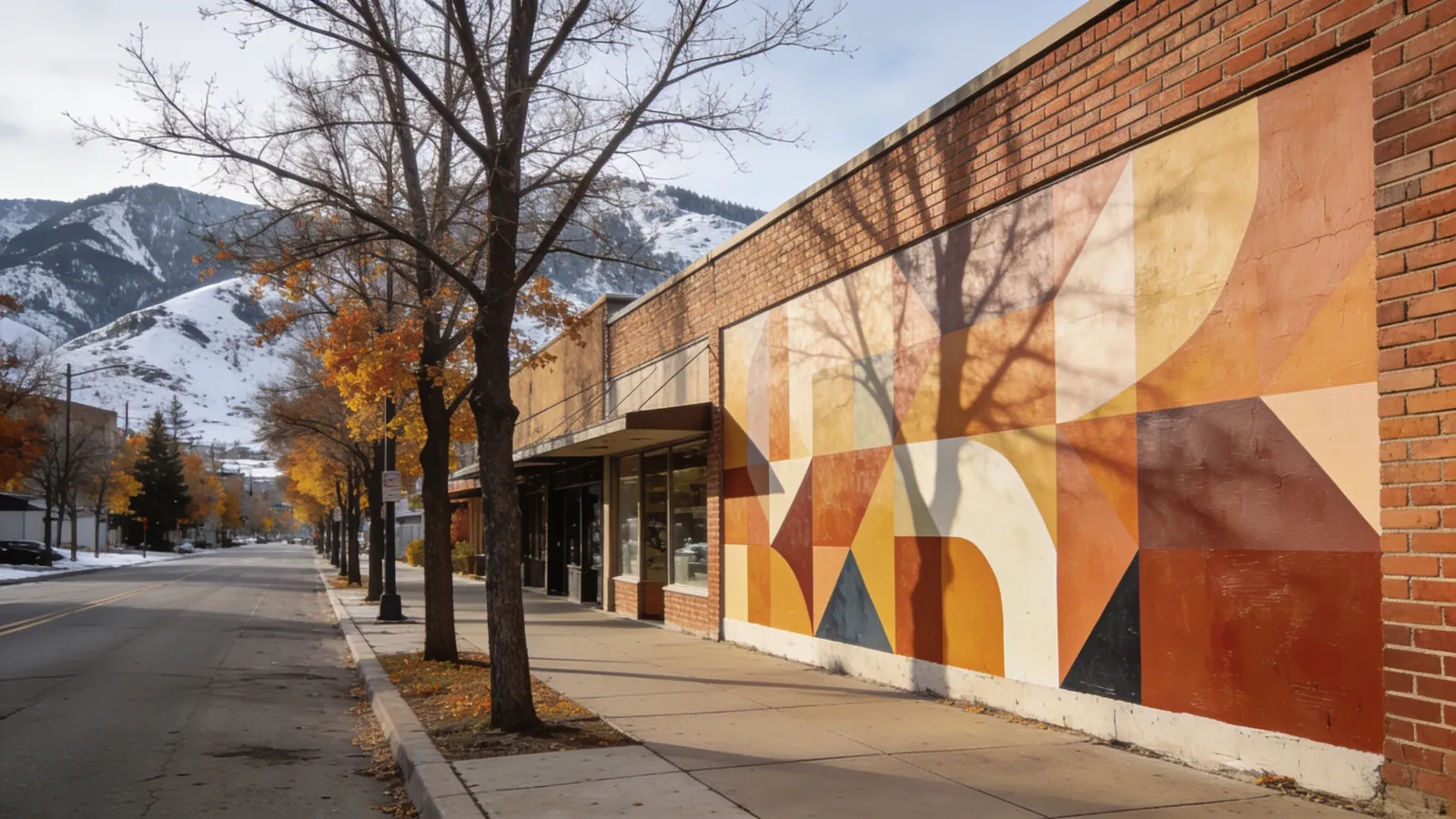
Ask anyone who has painted a room. The painting is the easy part. The hard part is the tape, the furniture, the opinion of the person who said "any color is fine" and then looked at the color. Now imagine doing it on six buildings owned by six different people, with six artists, public money and a city that has to explain itself afterward.
On November 4, 2026, Salt Lake City published the end of that story along North Temple. This post reads what the city says and what the program's own rules show, and what any small team can borrow from it. I am an operations person, not an art administrator, and I did not watch any of the work. It is my reading of public documents.
What was announced
The city's post of November 4, 2026, titled "Salt Lake City celebrates the completion of six new murals along North Temple," says six murals were completed through a public art initiative led by the Salt Lake City Community Reinvestment Agency with the Arts Council's Public Art Program. The CRA allocated $150,000 to the North Temple Mural Program. Six local artists were paired with businesses and property owners, and the Arts Council helped select them from its Pre-Qualified Pool.
The post lists the walls and the artists: Red Iguana 2 (Trevor Dahl), Rancho Market (Cole Eisenhour), ELJ Growth (Trent Call), Promontory Place Apartments (Matt Monsoon), 44 North Apartments (Brooklyn Ottens) and La Diana Market and Taqueria (Caro Nilsson). The stated goals are neighborhood revitalization, neighborhood identity, a better walking environment and new points of interest. The city also notes that the Arts Council's program began in 1984 under a Percent-for-Art ordinance that sets aside 1.5% of eligible city project funds for artists on new construction.
How it was set up
The CRA's "North Temple Mural Program Application Guidelines," a PDF posted on the agency's site in February 2026, shows the machinery behind the paint. Read as a project plan, it is tidy.
- Two steps, not one. First a competitive "Call for Walls," open from February 15 to March 15, 2026, to commercial or multi-family property owners in the project area. Walls were scored on location, visibility, size, maintainability and feasibility. Only then did a committee pick artists from the 2026 to 2028 Pre-Qualified Artist Pool.
- Budget sizes the scope. Awards were based on mural size at an industry-standard $20 to $25 per square foot, up to $25,000 per commission, until the money ran out. The guidelines expected "approximately five" murals "depending on mural size and final award amounts."
- One contract with three names. The city, the property owner and the artist sign a three-party agreement covering the wall, the artwork and the money. Owner and artist are both responsible for maintaining the mural for at least five years.
- Money follows milestones. Half of the commission is paid at signing and final design approval and half after the CRA inspects and approves the finished mural.
- A review window. The owner and the agency have 30 days to ask for changes to the artist's rendering, and a "significant variance" from the approved design needs the agency's approval before payment.
- A report at the end. The CRA gives its board a written briefing on the payments.
Planned and reported
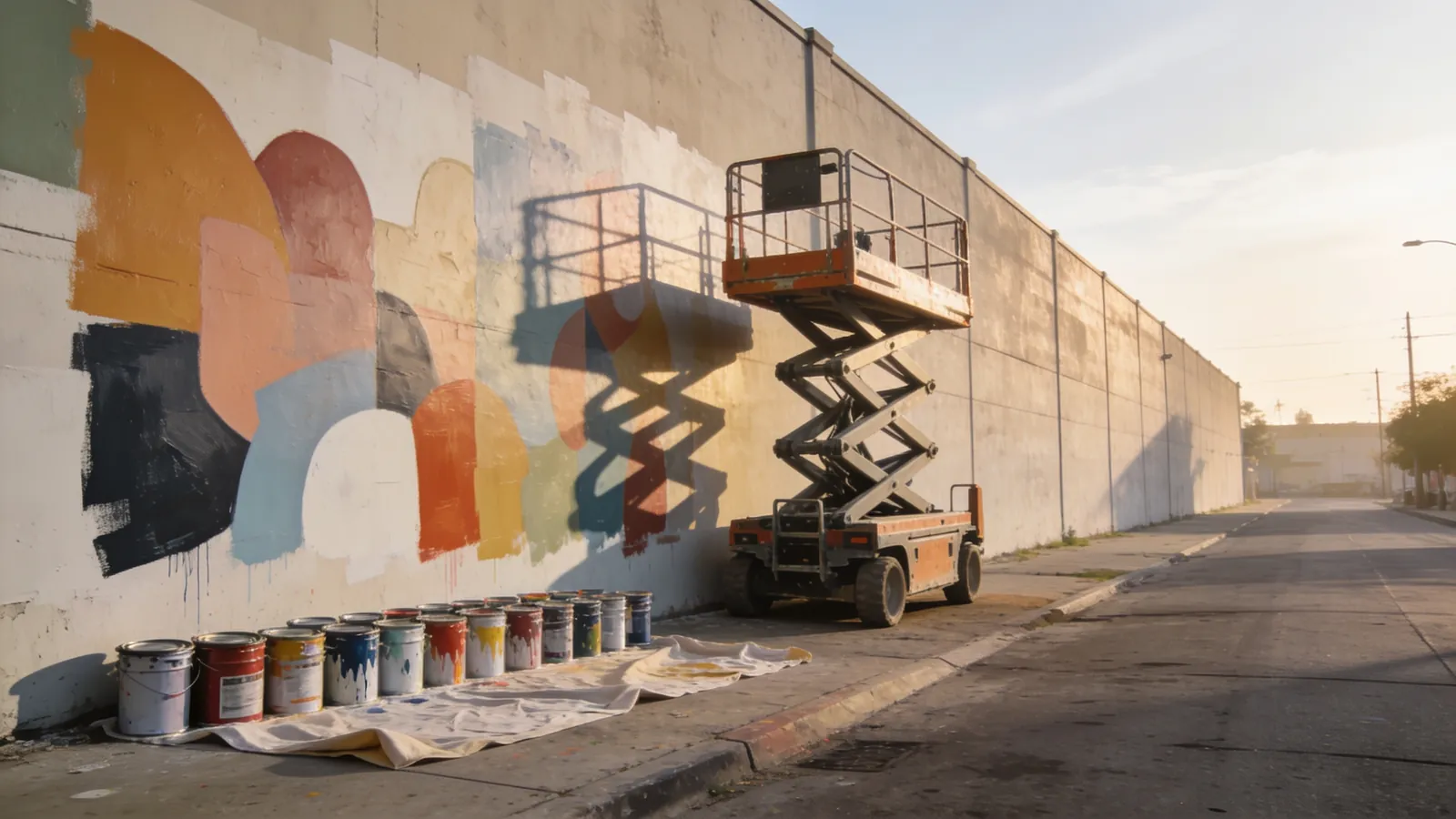
The guidelines include an estimated timeline, and they say clearly that the dates "are subject to change." The plan: wall and artist committees in March and April, selections mid-April, contracting in April and May, final designs in May and June, painting in June and July and a public event in August or September 2026.
| Item | Plan (guidelines, February 2026) | Reported (city, Nov 4, 2026) |
|---|---|---|
| Number of murals | About five | Six |
| Money | $20 to $25 per square foot, up to $25,000 each | $150,000 allocated |
| Public event | August or September 2026 | I found no report of one |
I will not call this a delay. The post does not say when each mural was finished, and the guidelines call their dates estimates. I found a city page saying the corridor received the murals "during the summer and fall of 2026," which fits either way. What I can say is that one date I looked for, a public event, I did not find.
What a small team can borrow
1. Let the budget size the scope. The program did not promise "as many murals as we can." It set a rate per square foot, a cap per commission and an expected count with a warning that the count depends on the sizes. That is how you avoid the sentence "we ran out of money at mural four." I wrote about the same idea in the cost management guide.
2. Split a hard choice in two. Choosing walls and choosing artists at once is a knot. Choosing walls first, by a scoring list, and artists second is two smaller decisions. A pre-qualified pool also makes the second step quick, because the paperwork was done before the project began. Any business that hires the same kinds of help again and again can keep its own short list.
3. Tie money to a milestone. Half at agreement and approved design, half after inspection. The artist is not left unpaid for months and the owner is not left holding a bad wall. It is a milestone payment in a few words, and the same logic behind a change order and a signed quote.
4. Put "who looks after it on Monday" in the contract. A five-year maintenance duty is written into the agreement. It is the unglamorous half of any project, and I wrote about it in the Pioneer Park follow-up.
5. Mark estimates as estimates. The guidelines say that their dates are estimates. That is a good habit. A date that is labeled as an estimate can be missed honestly. A date presented as a promise can only be missed dishonestly.
What I do not know
I read the city's post of November 4, 2026 and the CRA's application guidelines, posted in February 2026, in full. I did not read the signed agreements, the scoring of the walls, the list of applicants, the actual award for each mural or the CRA board's final briefing. I do not know the dates each mural was started or finished, whether the public event happened, how many walls applied or whether the $150,000 was fully spent. The arithmetic that six murals at the $25,000 cap would equal $150,000 is mine and does not mean that every award was at the cap. I will correct this post if any of it changes.
Related reading
For another Salt Lake City finish, see 600/700 North, and for the park that reopened last week, Pioneer Park. To run your own small project this way, start with the kickoff meeting agenda, the project charter guide and the one-page Project Focus.
This post summarizes public information as of November 17, 2026 and reflects my own reading, not an official position. Check Salt Lake City and the Community Reinvestment Agency for the official and final information.
Sources
- Salt Lake City: Salt Lake City celebrates the completion of six new murals along North Temple (Nov 4, 2026)
- Salt Lake City CRA: North Temple Mural Program Application Guidelines (PDF posted February 2026)
Facts come from the sources above. The reading of those facts is mine.
Everything new, once a month.
One email on the 1st of every month with everything new: articles, series parts, news, website updates, project results, where I am working and the business opportunities I am looking at. No spam.
- Fresh on the site right now
- ArticleMeasuring the Return of Automation: Hours, Errors and Cash, Counted Honestly
- NewsSix North Temple murals, $150,000: what a project manager sees in the city's mural program
- SeriesOperations that scale from 3 to 30 people