- Project Management WeeklyVol. 1
The PMBOK Lens
One project, followed from idea to closeout, one stage at a time.
No. 6WednesdaysNov 25, 2026Cover story · Part 6Running the work: executing and managing the teamAlso in this issue6 of 8 parts out
- 5What could go wrong: risk planningp. 7
- 4How long and how much: the schedule and cost baselinesp. 6
- In this issue8 parts
The PMBOK Lens
- 1Choosing the project: the business case and the charterp. 3
- 2Who is involved: the stakeholder registerp. 4
- 3What exactly are we building: scope and the work breakdownp. 5
- 4How long and how much: the schedule and cost baselinesp. 6
- 5What could go wrong: risk planningp. 7
- 6Running the work: executing and managing the teamp. 8
- 7Keeping score: monitoring and controllingDec 2
- 8Closing well and learning from itDec 9
From the editor
I will take a single project from idea to closeout and analyze it the way the PMBOK Guide suggests, one stage per article, showing what each tool looks like on a real job and where the textbook needs adapting.
Dennis Alejo
- Part 1 of 8Oct 21
Choosing the project: the business case and the charter
Before the plan, the schedule or the contractor, someone has to answer one question: should we do this at all? Part 1 of a series that follows one project from idea to closeout: build a business case, test it against bad news and turn it into a project charter.
Continued in the full articleIn brief
- Most projects are damaged before the plan exists: nobody wrote down why the project matters, what the alternatives were or what success would look like.
- A business case answers whether to do the project.
- Part 2 of 8Oct 28
Who is involved: the stakeholder register
Every card is a person who can help the project, stop it or quietly make it harder. The register puts them all on the table. Part 2 of a series that follows one project from idea to closeout: find every stakeholder, rate power and attitude and write an engagement plan for each.
Continued in the full articleIn brief
- A stakeholder is anyone who can affect the project or be affected by it, including people who never attend a meeting.
- A stakeholder register is a living table: who they are, what they want, what worries them, how much power and interest they have, where they stand today, where you need them and what you will do about it.
- Part 3 of 8Nov 4
What exactly are we building: scope and the work breakdown
One card at the top, a few below it and many at the bottom. That is a work breakdown structure, built with a pack of index cards. Part 3 of a weekly series: collect requirements, write a scope statement with real exclusions, build a WBS and a scope baseline, with a builder.
Continued in the full articleIn brief
- Scope is the fence around the project: what is in, what is out and what "done" means.
- Collect requirements by talking to the stakeholders you found in Part 2.
- Part 4 of 8Nov 11
How long and how much: the schedule and cost baselines
A baseline is a promise written down before the work starts, so that the team can tell later whether it is on track. Part 4 of a weekly series: from the WBS to a schedule and a cost baseline, with three-point estimates, the critical path, contingency and the S-curve.
Continued in the full articleIn brief
- A baseline is the approved version of the schedule and the budget, frozen on purpose.
- Build the schedule from the work packages of the WBS: list the activities, link them by dependencies, estimate each one and let the longest chain, the critical path, tell you the finish date.
- Part 5 of 8Nov 18
What could go wrong: risk planning
A risk plan is mostly a list of things you hope never happen, written down while everyone is still calm. Part 5 of a weekly series: find risks with a pre-mortem, write them as sentences, score them, price the top ones and choose a response and a trigger for each.
Continued in the full articleIn brief
- A risk is an uncertain event that, if it happens, changes the project for better or worse.
- Keep a register that fits on one page: the risk written as a sentence (cause, event, effect), a chance, an impact, an owner and a response.
- Part 6 of 8Nov 25
Running the work: executing and managing the team
A team moves when the oars are in the water at the same time. Running the work is mostly about the rhythm. Part 6 follows the invented Riverside clinic into execution: five habits for running the work, a change request priced in days and dollars, and how to manage a team.
Continued in the full articleIn brief
- Executing is doing the plan while the plan changes.
- A risk that wakes up becomes an issue.
- Part 7 of 8Dec 2
Keeping score: monitoring and controlling
Out on Wed Dec 2. The page is already in the issue, waiting for the story.
Scheduled · Wed Dec 2 - Part 8 of 8Dec 9
Closing well and learning from it
Out on Wed Dec 9. The page is already in the issue, waiting for the story.
Scheduled · Wed Dec 9 - Next issueDec 2
Part 7 comes out Wed Dec 2
Keeping score: monitoring and controlling
Later in this series
- Closing well and learning from itDec 9
Series
One part a week, step by step.
Every series is a project management magazine of its own: a cover story, an "in this issue" page and one newspaper page for each part, with the ones still to come already waiting. Turn the pages here, or go straight to the article.
The magazines
Turn the pages.






- Project Management WeeklyVol. 1
Project Focus
Turn goals into owned projects and run them with a weekly rhythm.
No. 6ThursdaysNov 26, 2026Cover story · Part 6When to automate and when to add an AI agentAlso in this issue6 of 8 parts out
- 5From goal to owned project: the project cardp. 7
- 4The weekly rhythm: a 30-minute meeting that runs the businessp. 6
- In this issue8 parts
Project Focus
- 1Project Focus on one pagep. 3
- 2The three engines: leads, operations and salesp. 4
- 3Your first scoreboard: three numbers that matterp. 5
- 4The weekly rhythm: a 30-minute meeting that runs the businessp. 6
- 5From goal to owned project: the project cardp. 7
- 6When to automate and when to add an AI agentp. 8
- 7Project Focus in a restaurant, a clinic and a startupDec 3
- 8The 90-day review: what to keep, fix and dropDec 10
From the editor
A practical series on the method behind everything on this site: how to turn goals into owned projects, run them with a simple weekly rhythm and let automation and AI carry the repeating work.
Dennis Alejo
- Part 1 of 8Oct 22
Project Focus on one page
Project Focus fits on one page: a goal, three engines, a few owned projects, three numbers and a weekly rhythm. Part 1 of a weekly series: the whole Project Focus method on one page, with a goal, three engines, owned projects, three numbers and a weekly rhythm.
Continued in the full articleIn brief
- Project Focus is a simple method: turn goals into projects with owners, run them with a weekly rhythm and three numbers, and let automation and AI carry the work that repeats.
- It rests on one belief: any business can succeed, whatever its size, when it concentrates on finishing its internal projects.
- Part 2 of 8Oct 29
The three engines: leads, operations and sales
Every business has a front door, a counter and a kitchen. Project Focus calls them leads, sales and operations. Part 2 of a weekly series: the three engines of a business, how each one leaks and a tool that shows where your sales process loses people.
Continued in the full articleIn brief
- Almost every business runs on three engines: **leads** (people who find out about you), **sales** (people who decide to buy) and **operations** (the work that delivers what you promised).
- Each engine has a typical leak: leads that are never answered, quotes that never get a follow-up, jobs that have to be redone.
- Part 3 of 8Nov 5
Your first scoreboard: three numbers that matter
Three dials, one glance. That is all a scoreboard has to be. Part 3 of a weekly series: choose three numbers for leads, sales and operations, define them, set a baseline and read them every week.
Continued in the full articleIn brief
- A scoreboard is three numbers, one for each engine of the business, looked at every week.
- A number earns its place only if you can measure it without a new system, it has one owner, it has a one-line definition anyone can repeat, and it points to an action when it moves.
- Part 4 of 8Nov 12
The weekly rhythm: a 30-minute meeting that runs the business
One voice at a time, one page on the table, thirty minutes on the clock. Then everyone leaves knowing what happens next. Part 4 of a weekly series: a five-part, 30-minute weekly meeting with a scoreboard, commitments, projects and decisions, plus rules that keep it short.
Continued in the full articleIn brief
- A business runs on rhythm.
- The meeting has one job: to look at the scoreboard, close last week's commitments, check each project, decide what needs deciding and make new commitments with names and dates.
- Part 5 of 8Nov 19
From goal to owned project: the project card
One card, one project, one name at the top. If the project does not fit on the card, it is not yet a project. Part 5 of a weekly series: turn a goal into a project with one page, seven fields, one owner and about three active projects at a time.
Continued in the full articleIn brief
- A goal is a wish with a number.
- The project card is one page with seven fields: the goal in one sentence with a number and a date, the owner, why it matters, three milestones, the next action, the biggest risk and what "done" looks like.
- Part 6 of 8Nov 26
When to automate and when to add an AI agent
Automation is a marble run: great when the track is built and the balls are all the same. It is useless when the balls keep changing shape. A six-rung ladder for deciding between fixing a step, automating it with rules, drafting with AI or letting an agent act, with guardrails and one owner for each.
Continued in the full articleIn brief
- Before you automate anything or add an AI agent, fix the step.
- Plain automation fits steps with the same input and the same output every time.
- Part 7 of 8Dec 3
Project Focus in a restaurant, a clinic and a startup
Out on Thu Dec 3. The page is already in the issue, waiting for the story.
Scheduled · Thu Dec 3 - Part 8 of 8Dec 10
The 90-day review: what to keep, fix and drop
Out on Thu Dec 10. The page is already in the issue, waiting for the story.
Scheduled · Thu Dec 10 - Next issueDec 3
Part 7 comes out Thu Dec 3
Project Focus in a restaurant, a clinic and a startup
Later in this series
- The 90-day review: what to keep, fix and dropDec 10






- Project Management WeeklyVol. 1
The Civil Engineer's Desk
How construction projects are really run, seen from the owner's side.
No. 2FridaysOct 30, 2026Cover story · Part 2The owner's representative: protecting the owner's interestAlso in this issue2 of 2 parts out
- 1What a construction project is really made ofp. 3
- In this issue2 parts
The Civil Engineer's Desk
From the editor
A short series on how construction projects are really run, seen from the owner's side of the table: who decides what, and the simple controls that protect both sides.
Dennis Alejo
How to read it
- Two parts that follow a construction project from its first idea to the owner's controls.
- Each part ends with a checklist an owner can use in the next meeting.
- Examples come from roads, public programs and healthcare buildings, always with the details anonymized.
- Part 1 of 2Oct 23
What a construction project is really made of
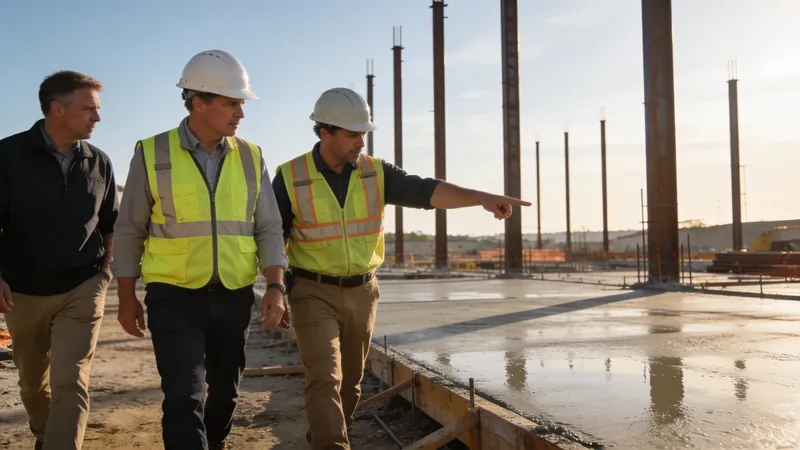
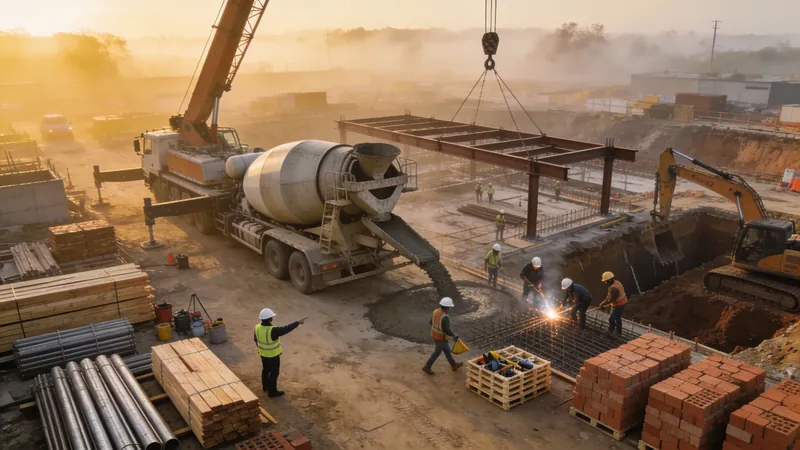
From above it looks like chaos with a hard hat. From the desk, it is five flows that have to arrive in the right order. Part 1 of a weekly series from a civil engineer's desk: the five flows that every building project is made of, where each one clogs and how to control it.
Continued in the full articleIn brief
- A construction project is not made of concrete and steel.
- Each flow has a typical clog and a simple control.
- Part 2 of 2Oct 30
The owner's representative: protecting the owner's interest
Everyone on a building site is working. The owner's representative is the person whose only job is to work for the owner. Part 2 of a weekly series: whose side everyone is on, the seven things an owner's representative protects and a ten-question check for your project.
Continued in the full articleIn brief
- On a construction project, every other party has a legitimate interest that is not the owner's: the designer wants the design built as drawn, the builder wants to finish profitably and the trades want to move on.
- Protecting the owner's interest means guarding seven things: scope, money, schedule, quality, decisions, information and the relationship.
- The endfor now
Every part is out
The series is complete for now. New chapters are added when there is something worth saying.
- Project Management WeeklyVol. 1
AI at Work
Practical AI for a small business, one workflow at a time.
No. 5MondaysNov 23, 2026Cover story · Part 5Measuring the return: hours saved, errors avoided, revenue wonAlso in this issue5 of 6 parts out
- 4AI for customers: answers and onboardingp. 6
- 3AI for operations: reports, schedules and checklistsp. 5
- In this issue6 parts
AI at Work
- 1Where AI helps a small business, and where it does notp. 3
- 2AI for sales: follow-up that never forgetsp. 4
- 3AI for operations: reports, schedules and checklistsp. 5
- 4AI for customers: answers and onboardingp. 6
- 5Measuring the return: hours saved, errors avoided, revenue wonp. 7
- 6Risks, privacy and a one-page AI policyNov 30
From the editor
A practical series for owners who want results from AI, not experiments: where it helps, where it does not, how to start with one workflow and how to measure whether it paid back.
Dennis Alejo
- Part 1 of 6Oct 26
Where AI helps a small business, and where it does not
The best use of AI in this picture is the one that gives the owner back ten minutes. The worst is letting the machine decide what the customer gets. Part 1 of a weekly series: think of AI as a fast intern with no common sense. Four tests and a traffic-light map show what to hand over and what to keep.
Continued in the full articleIn brief
- Think of AI as a very fast intern with a good memory, excellent writing speed and no common sense.
- Use four tests before you hand a task to AI: does it repeat, does it follow rules, is a mistake cheap, and can a person check the result in a minute?
- Part 2 of 6Nov 2
AI for sales: follow-up that never forgets
Every pile of cards is a pile of promises to follow up. Most of them stay in the pile. Part 2 of a weekly series: five follow-up moments, a handbook for your AI assistant, the rules of the road and four numbers that show whether it works.
Continued in the full articleIn brief
- Most sales are not lost to a "no." They are lost to silence: a quote sent on Tuesday, a polite "let me think about it," and then two people each waiting for the other to speak.
- A small business has five follow-up moments: a new inquiry, after a conversation, after a quote, after a "not now," and after the job.
- Part 3 of 6Nov 9
AI for operations: reports, schedules and checklists
Reports, schedules and checklists are the paperwork of operations. They are also the best first place to give AI a job. Part 3 of a weekly series: use AI for the paperwork of operations, with three prompts, the guardrails and four numbers that show whether it works.
Continued in the full articleIn brief
- Operations runs on three kinds of paper: reports (what happened), schedules (who does what, when) and checklists (what must not be forgotten).
- For reports, give the assistant your numbers and notes and ask for a plain-English draft, a list of what changed and a list of decisions needed.
- Part 4 of 6Nov 16
AI for customers: answers and onboarding
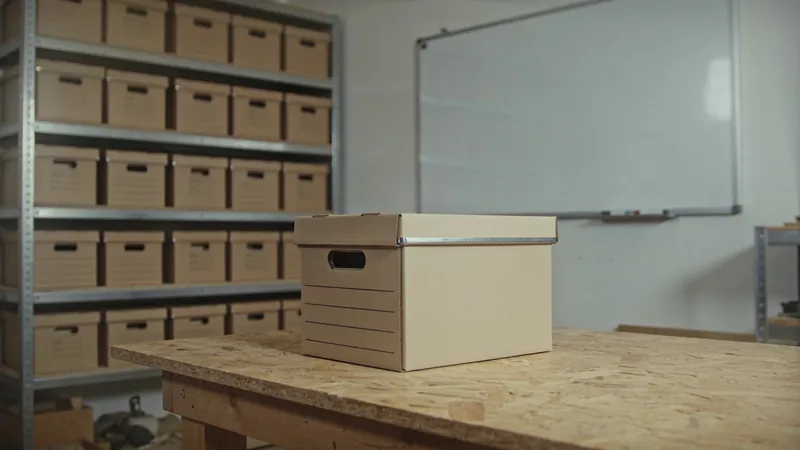
The best customer answers are written once, by a person, and kept in a box. AI helps you find the right card and write the reply. Part 4 of a weekly series: use AI for customer answers and onboarding with an approved library, three levels of trust and four numbers that show whether it works.
Continued in the full articleIn brief
- Customers ask the same twenty questions again and again: hours, prices, timing, what happens next.
- Use three levels.
- Part 5 of 6Nov 23
Measuring the return: hours saved, errors avoided, revenue won
Put the benefit on one pan and the cost on the other. If you only weigh one side, you are not measuring. How to tell whether an AI tool earned its place: a baseline, three ledgers, a weekly spot-check of ten outputs and a one-page scorecard with a keep, fix or drop.
Continued in the full articleIn brief
- "The AI saves us a lot of time" is a feeling, not a result.
- Measure the baseline before you switch anything on: how long the task took, how many errors it had and how many you handled in a normal week.
- Part 6 of 6Nov 30
Risks, privacy and a one-page AI policy
Out on Mon Nov 30. The page is already in the issue, waiting for the story.
Scheduled · Mon Nov 30 - Next issueNov 30
Part 6 comes out Mon Nov 30
Risks, privacy and a one-page AI policy





- Project Management WeeklyVol. 1
Utah, Run Like a Project
Local business, local rules and a project plan for each.
No. 5TuesdaysNov 24, 2026Cover story · Part 5Growing with the region: the 2034 Games, construction and tourismAlso in this issue5 of 5 parts out
- 4Operations that scale from 3 to 30 peoplep. 6
- 3Hiring and staffing in a tight labor marketp. 5
- In this issue5 parts
Utah, Run Like a Project
From the editor
A local series on running a Utah business with the tools of project management: a 30-day start plan, the support that exists in the state, hiring, operations that scale and how the region is changing.
Dennis Alejo
How to read it
- Five parts, each one a small project with an owner, a date and a scoreboard.
- Every part points to official sources and local organizations, with the date I checked them.
- Where rules or fees matter, you are sent to the official page or a licensed professional.
- Part 1 of 5Oct 27
Starting: a 30-day plan with the official steps
The first morning is a nice picture. This article is about the thirty days of paperwork that come before it. Part 1 of a weekly series: four offices, one 30-day plan. Register, get an EIN, open the accounts and apply for licenses, in the order that avoids waiting.
Continued in the full articleIn brief
- Starting a business in Utah is a project with about a dozen small tasks, most of them at four doors: the state's business registry, the IRS, the State Tax Commission and your city or county.
- The long waits are not where people expect.
- Part 2 of 5Nov 3
Money and support: SBDC, SBA and local resources
In Utah, the best first call is often a free one. The money conversation goes better after it. Part 2 of a weekly series: advice first, numbers second, money third. SBDC, SCORE, APEX, SBA microloans, 7(a) and 504 loans, and a loan-readiness check.
Continued in the full articleIn brief
- Most of the "free money for small business" you find online is advice for sale, not money.
- The SBA does not lend directly.
- Part 3 of 5Nov 10
Hiring and staffing in a tight labor market
A handshake is the end of the hiring project, not the beginning. Most of the work happens before and after it. Part 3 of a weekly series: volume or friction, a one-page role charter, employee or contractor, the day-one list for Utah employers and onboarding.
Continued in the full articleIn brief
- Treat every hire as a small project with a goal, an owner, a plan and a date.
- Before you hire, check whether you need hands or help.
- Part 4 of 5Nov 17
Operations that scale from 3 to 30 people
A shop where everything has a place is not a shop with more rules. It is a shop where the rules live in the room and not in one person's head. Part 4 of a weekly series: what breaks at 3, 8, 15 and 30 people, five one-page processes, decision rights with limits, three numbers and a weekly meeting.
Continued in the full articleIn brief
- A business does not break at a certain size because people are lazy.
- Four stages tend to show up as a team grows: about 3 people, 8, 15 and 30.
- Part 5 of 5Nov 24
Growing with the region: the 2034 Games, construction and tourism
The road to 2034 is long and mostly empty today. The best time to plan for traffic is while the road is quiet. Utah's region is growing three ways at once: construction, tourism and a 2034 Games plan. A four-lane map and a 2029 plan to decide where your business fits.
Continued in the full articleIn brief
- Utah is growing in three ways at once: jobs and construction, tourism and a plan for the 2034 Winter Games.
- Read three public numbers with their dates.
- The endfor now
Every part is out
The series is complete for now. New chapters are added when there is something worth saying.




- Project Management WeeklyVol. 1
Process Teardown
One common business process, taken apart step by step.
No. 3SaturdaysNov 21, 2026Cover story · Part 3The handoff: from signed yes to kickoffAlso in this issue3 of 6 parts out
- 2The quote: from request to signed yesp. 4
- 1The new inquiry: from "contact us" to a first answerp. 3
- In this issue6 parts
Process Teardown
- 1The new inquiry: from "contact us" to a first answerp. 3
- 2The quote: from request to signed yesp. 4
- 3The handoff: from signed yes to kickoffp. 5
- 4The delivery: keeping the work and the customer movingNov 28
- 5The invoice: from "done" to money in the bankDec 5
- 6The monthly review: what the processes just taught youDec 12
From the editor
Each week I take one common business process apart on the table: the new inquiry, the quote, the handoff, the delivery, the invoice. I map the steps, find where the work waits or leaks, and show the smallest fix that holds.
Dennis Alejo
- Part 1 of 6Nov 7
The new inquiry: from "contact us" to a first answer
The first answer is the first impression. Most businesses leave it to chance. Part 1 of a weekly series: map a new inquiry from "contact us" to a first answer, find the six leaks and fix them with a name, a promise and four numbers.
Continued in the full articleIn brief
- A new inquiry is not a marketing event.
- The process runs from "a stranger presses send" to "that person has a useful first answer and a clear next step." Most of the leaks sit in between: nobody owns the inbox, the first reply asks for what the form already said, and nobody follows up.
- Part 2 of 6Nov 14
The quote: from request to signed yes
Measure twice, cut once, quote once. Then follow up, because a quote nobody answers is only a polite sentence. Part 2 of a weekly series: map a quote from request to written yes, find six leaks and fix them with a template, a menu, follow-ups and four numbers.
Continued in the full articleIn brief
- A quote is not a document.
- The six leaks I see most often: an incomplete request, a quote that waits for the one person who knows the prices, a quote built from scratch every time, a quote that says too little, no follow-up and no record of why you lost.
- Part 3 of 6Nov 21
The handoff: from signed yes to kickoff
In a relay race the baton is dropped in the handoff, not on the straight. A signed yes is the same: the risky part is the next ten feet. Part 3 of a weekly series: map the handoff from signed yes to kickoff, find six leaks and fix them with a nine-field sheet, a kickoff and four numbers.
Continued in the full articleIn brief
- The handoff is the stretch between "the customer said yes" and "the work starts with everyone knowing what it is." It is where the person who sold the job passes it to the person who does it, and it is where a surprising amount of money, goodwill and sleep is lost.
- Six leaks show up again and again: the promise lives in one head, the yes arrives without the details, the kickoff happens late, the customer does not know what you need from them, the team learns the scope by surprise and nobody confirms that the first step happened.
- Part 4 of 6Nov 28
The delivery: keeping the work and the customer moving
Out on Sat Nov 28. The page is already in the issue, waiting for the story.
Scheduled · Sat Nov 28 - Part 5 of 6Dec 5
The invoice: from "done" to money in the bank
Out on Sat Dec 5. The page is already in the issue, waiting for the story.
Scheduled · Sat Dec 5 - Part 6 of 6Dec 12
The monthly review: what the processes just taught you
Out on Sat Dec 12. The page is already in the issue, waiting for the story.
Scheduled · Sat Dec 12 - Next issueNov 28
Part 4 comes out Sat Nov 28
The delivery: keeping the work and the customer moving
Later in this series
- The invoice: from "done" to money in the bankDec 5
- The monthly review: what the processes just taught youDec 12


There is a book in the works too, comparing the Japanese and the American way of managing projects. See the cover and the idea. For every date, see the calendar.
Say hello
Something you would like me to write about?
Ask a question, suggest a topic or tell me what an article changed for you.