Hospitality · 10 min read
Your Restaurant Is a Project (and So Is Your Tuesday)
A restaurant is a thousand tiny deadlines a day. Project management turns the chaos into a rhythm.
 Dennis AlejoProject manager · Civil engineer · · 2,213 words
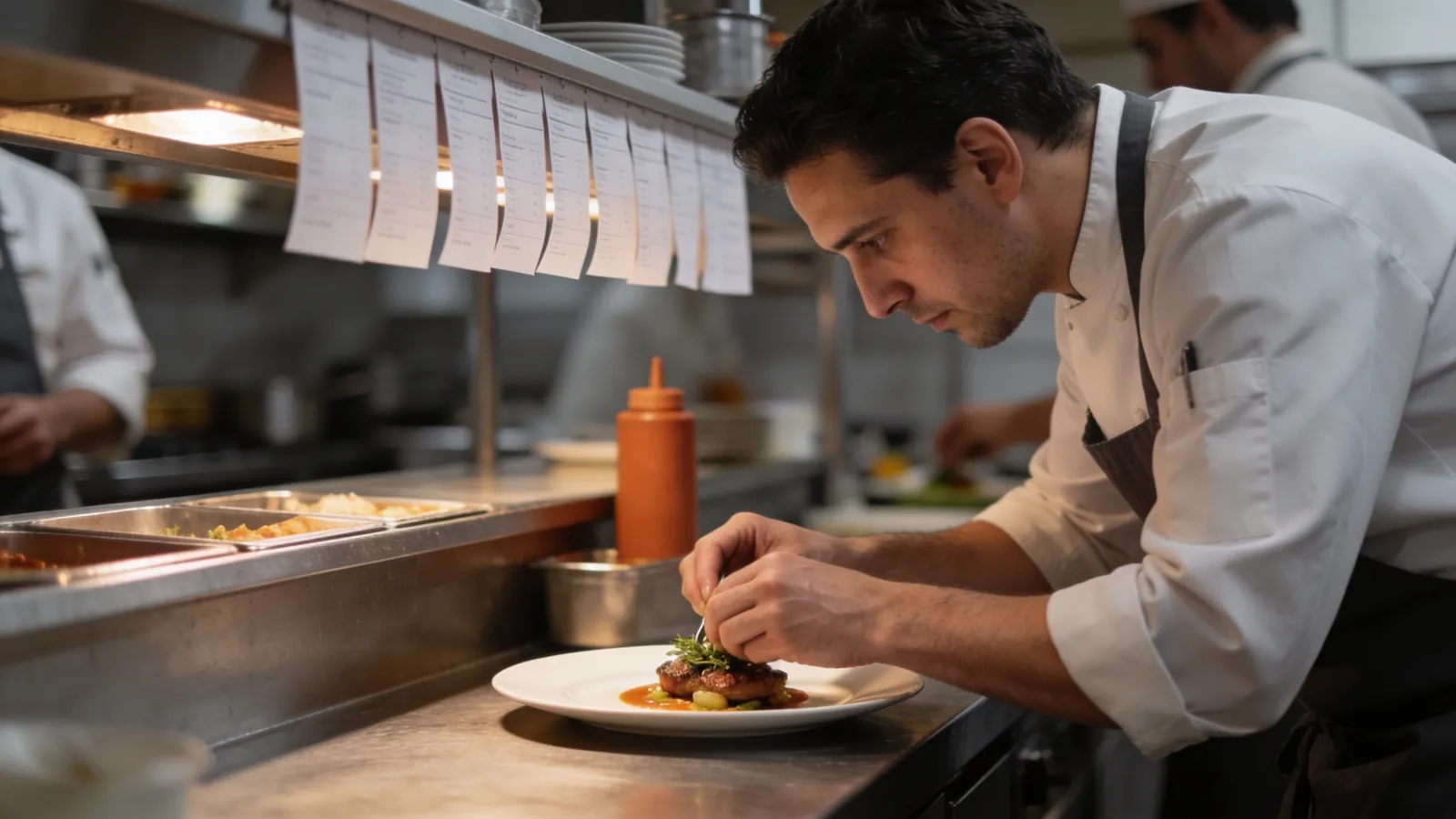
Walk into a busy kitchen at seven in the evening and you are watching project management in real time. The order tickets are tasks. The pass is a delivery gate. The chef calling out times is a project manager with a very sharp knife and no patience for status reports. Nobody holds a Gantt chart, and yet the entire room is executing a schedule so precise that a plate of food needs to leave the pass in the same minute the grill finishes the protein, the garnish is placed and the table is ready to receive it.
I have never claimed to be a restaurateur, but I have spent a career around projects where time, people and materials collide, and a restaurant is the most honest version of that collision I know. It is also close to my heart: one of the projects I am developing is a Peruvian food concept, Qory Cuisine, and designing how it will run has been a wonderful excuse to look at kitchens through a project lens.
This article is for anyone who owns, manages or dreams about a restaurant, a café, a food truck or a lodge kitchen. It is also for anyone who has ever said "Tuesdays are just chaos." The thesis is simple: your restaurant is a project, and so is your Tuesday. Once you see the structure, you can improve it.
The plate is the tip of the iceberg
A dish looks simple on the pass: protein, sauce, garnish, a clean rim. But behind that plate is a chain of work that started days earlier. Someone ordered the ingredients. Someone received and checked them. Someone broke down the product, made the stock, reduced the sauce, portioned the garnish, labeled the containers and wrote the date on the tape. Someone cleaned the station. Someone made sure there was a cook on the line who knew how to plate the dish the way you want it plated.
If any link in that chain fails, the plate is late, wrong or missing. And here is the uncomfortable truth: restaurants rarely fail because the food is bad. They fail because the small projects around the food are unmanaged. The sauce was made, but nobody noticed the stock was low until nine o'clock. The special sold out, but the front of house kept recommending it. A cook called in sick and the schedule lived in someone's head.
Those are not cooking problems. They are planning problems, and planning problems have planning solutions. The first step is to stop thinking of "the kitchen" as one big blur and start seeing the individual projects inside it, each with a goal, an owner, a deadline and a dependency.
Service is a project with an immovable deadline
Most projects negotiate their deadlines at some point. Dinner service does not. The doors open at five, the first table sits at five-ten, and no amount of enthusiasm will push that back by an hour. That immovable deadline is exactly why restaurants are such good teachers: they force you to plan backward, which is what project managers do for a living.
Backward planning means starting from the finish line and asking, step by step, what has to be true before it. For opening time, the list might sound like this: the dining room is set, the line is stocked, the specials are tasted and written, the staff know the allergy notes, the reservations are reviewed, the music and lighting are right. Each of those has its own list behind it, and each of those lists has an owner.
Something else happens when you plan this way: you begin to see what is actually urgent. A cook who is prepping the third garnish at four-thirty is fine. A cook who has not started the long-cooking braise at four-thirty is a problem, because that is on the critical path. Your sous-chef probably does this by instinct. The goal is to make the instinct visible, shareable and teachable, so that when your sous-chef is off, Tuesday does not collapse.
Mise en place is project planning in steel containers
"Mise en place" literally means "everything in its place," and it may be the most elegant planning discipline ever invented. A good cook does not start cooking when the ticket arrives. They start long before, arranging every ingredient, tool and container so that during service the only thing left to do is the work itself.
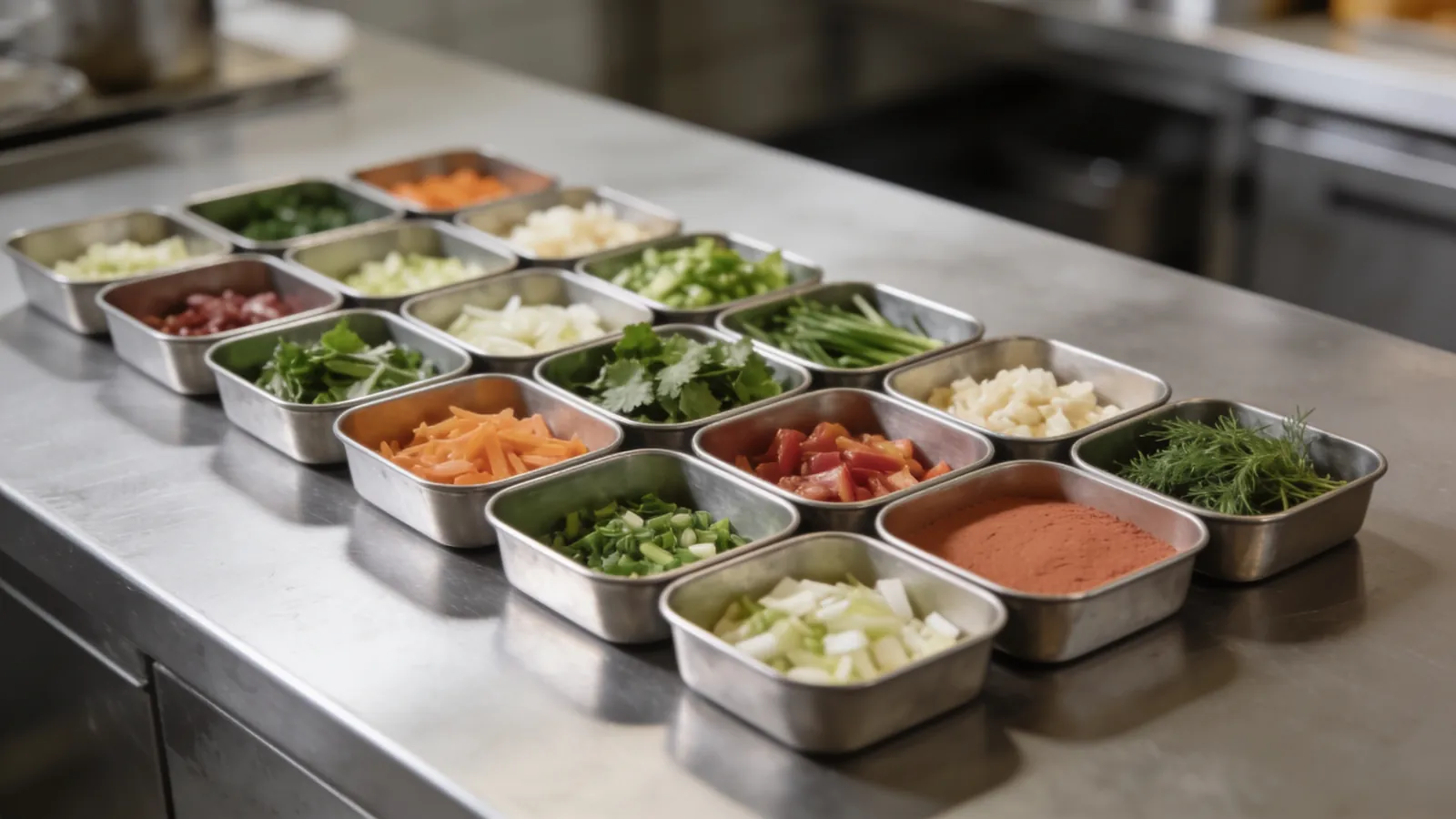
Think of what that really is. It is a plan expressed physically. The tray is the task list. The labeled container is the owner and the due date. The empty space on the counter is the visible signal that something is missing. You do not need an app to see that the shallots are low; the counter tells you.
The lesson for the rest of the business is that good planning should be visible. A prep list taped to the wall with names next to it beats a clever spreadsheet nobody opens. A whiteboard behind the pass that shows the day's specials, the eighty-sixed items and the VIP tables does the work of a project dashboard. The best restaurants I have seen use very low-tech tools very consistently, and the consistency is the point.
Where small restaurants lose their evenings
If I had to name the five leaks that cost small restaurants the most time and money, I would start with these. You can probably guess where yours is.
- Inventory by feeling. "I think we have enough" is not an inventory system. It is how you end up buying emergency produce at retail prices on a Friday.
- Front and back of house on different planets. The kitchen runs out of something and the servers keep selling it, because the information never crosses the pass.
- Prep without owners. A list of tasks with no names means the same two people always do the hard ones and everyone else discovers they were "about to start."
- Training by osmosis. New hires learn by watching whoever is least busy, which means they learn whatever that person's habits happen to be, good or bad.
- No debrief. The night ends, everyone is tired, and the same problem returns the next week wearing a different jacket.
None of these requires a consultant. Each of them requires a small, repeatable process that somebody owns. That is all project management is: turning the thing everybody half-knows into a thing somebody is responsible for.
Inventory as a trigger, not a feeling
The most useful inventory concept for a small restaurant is the "par level": the minimum amount of an item you want on hand at the start of a shift or day. When you fall below par, an order goes out. That is it. The trigger is a number, not a mood.
Setting par levels takes a few weeks of paying attention, because the right number depends on your menu and your volume. Start with your twenty most important items. Write the par next to each one. Have whoever closes count them, and have whoever opens compare the count to par. If the count is below, the order list builds itself.
This is also where simple automation starts to shine. Once par levels exist, a spreadsheet or inexpensive inventory tool can turn counts into a supplier order, send it at the same time every day and remind you when something has not been confirmed. You are not replacing judgment. You are removing the part of the job that was always going to be forgotten on the busiest day of the week.
Training is a process, not a personality
Every restaurant has a version of the same sentence: "It takes a while to learn how we do things here." It is usually said with pride, and it is usually a warning sign. If it takes months to become productive because everything lives in the heads of three veterans, your business is exposed. One resignation away from a very bad week.
The fix is to write down the way your best people work, and to do it in the smallest useful units. A station card with five lines on what a ready station looks like. A page for opening duties. A page for closing duties. A one-minute video on how the signature dish is plated. None of this needs to be beautiful. It needs to exist, to be correct, and to be updated whenever someone finds a better way.
With even a light set of checklists, a new cook can run their station with confidence in days rather than months. That is better for them, better for the guests and much better for the person who currently has to answer the same ten questions every shift.
A word about Tuesdays
Why does this matter on a quiet Tuesday and not only on a packed Saturday? Because Tuesdays are where habits are built. A Saturday service is survival mode: everyone is moving too fast to try anything new. A Tuesday is the one night a week with enough breathing room to test an idea, train a new cook on a station, rehearse the specials or try a new prep schedule. Restaurants that treat their slow days as practice sessions get steadily better at the busy ones. Restaurants that treat slow days as a time to coast stay exactly where they are. If your Tuesday is a project, its goal is simple: leave the kitchen a little more ready than you found it.
The five-minute debrief
The cheapest improvement in the entire restaurant world is a debrief that lasts five minutes. When service ends, before anyone leaves, gather the team and ask three questions:
- What went well tonight that we want to repeat?
- What slowed us down or nearly went wrong?
- What is one thing we will do differently tomorrow, and who owns it?
Write the answers on the same whiteboard every night. Over a month you will have a list of the actual friction in your business, in your team's own words. Some of it you will fix in a day. Some of it will point to a deeper problem, like a layout that forces cooks to cross paths or a supplier who delivers late. Either way, you will stop meeting the same problems for the first time again and again.
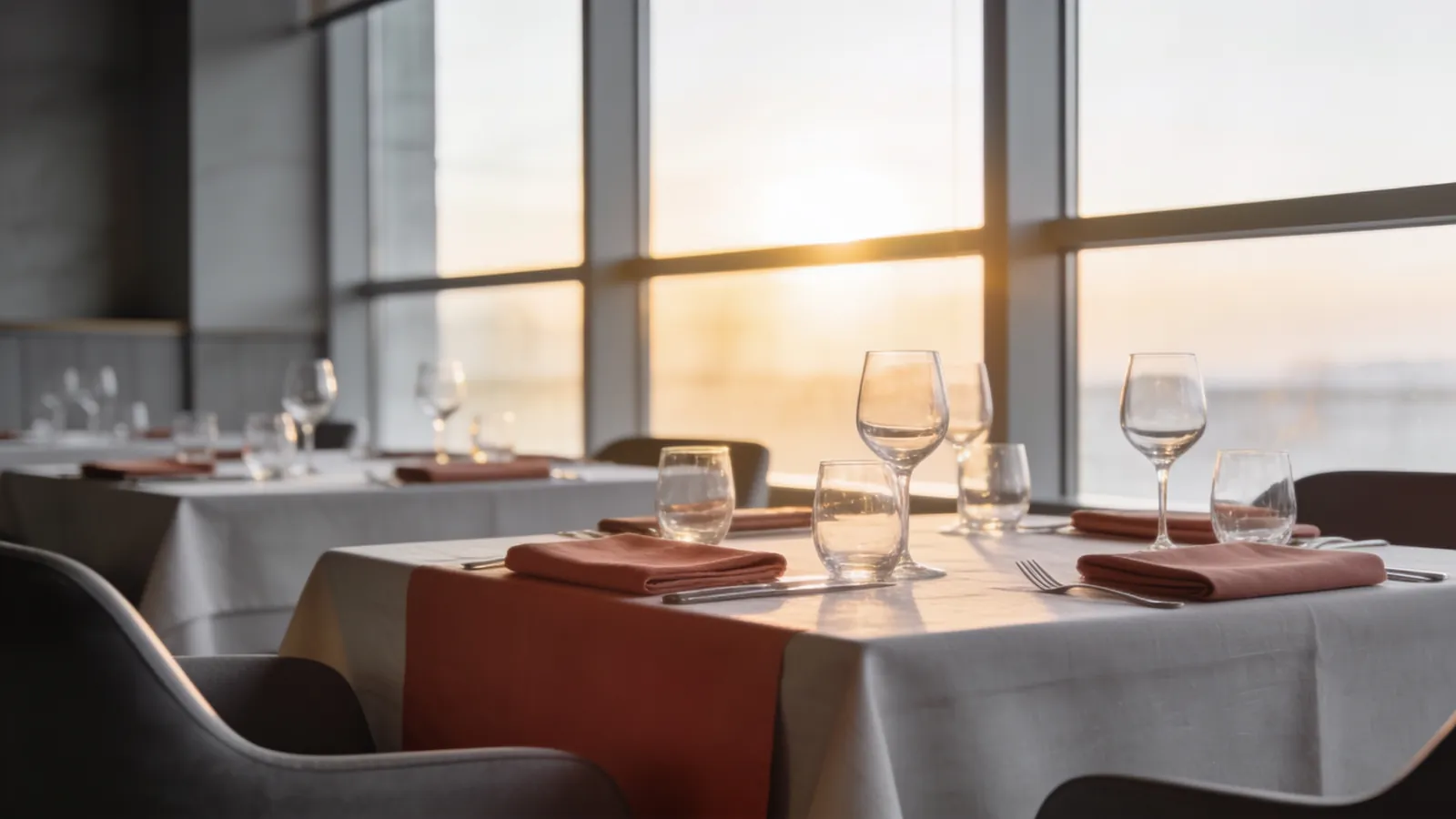
Try it: plan backward from your doors
Here is a small tool to put this into practice. Enter the time your doors open, and it builds a sample timeline of the hours before service, the way a project manager would. It is a template, not a rule. Change the steps to fit your kitchen, your size and your menu.
Notice how the schedule moves the stress earlier. By the time the doors open, the hard decisions have already been made. That is the secret behind the calm of well-run restaurants: the chaos is not absent, it was dealt with at three in the afternoon, when it was still cheap.
Where automation helps, and where it must never go
I get excited about automation, and I also want to protect what makes hospitality special. So here is how I draw the line.
Automate the logistics:
- Reservation confirmations and reminders, which reduce no-shows without anyone typing a message.
- Supplier reorders triggered by par levels.
- Staff scheduling reminders and shift swaps.
- Review requests sent to guests who clearly had a good time.
- Weekly numbers: covers, sales, waste, collected into one page without someone copying cells at midnight.
Never automate the welcome. A guest should be greeted by a human who looks them in the eye. A complaint should be answered by someone who can apologize and fix the problem. The point of removing admin work is to give your people more time for exactly these moments. A team that is not drowning in logistics has the energy to be warm.
If you want to go deeper on this idea, the article on seven workflows every small business should automate shows how to choose the first few, and AI agents for sales explains how to hand a repetitive job to an assistant without losing control of it.
Start this week
You do not need to rebuild your restaurant. You need a few small habits, repeated until they feel normal.
- Monday: write a par level next to your twenty most important items.
- Tuesday: put a name next to every item on the prep list.
- Wednesday: write one station card for the station that confuses new hires the most.
- Thursday: run your first five-minute debrief.
- Friday: plan the weekend backward from opening time.
Do that for a month and Tuesday will stop being the day you survive. It will become the day you practice, which is a much nicer way to spend a Tuesday. If you are building a food or hospitality project, Project Focus is built for exactly this: making growth boring so the experience can stay special.
And now your turn. What is the one small task that decides how your busiest day goes? Tell me in the comments.
Go deeper. Two related guides go further. Capacity planning and bottlenecks looks at why one station sets the pace of a whole kitchen, and the project communication plan people actually read shows how to brief a team in the ten minutes before service.
Frequently asked questions
Is a restaurant really a project if it runs every day?
Yes. Each service has a goal, a hard deadline, limited resources and dependencies, which is the definition of a project. The difference is that it repeats, so improvements compound. A better prep plan on Monday makes Tuesday better, and Tuesday's lessons improve Wednesday.
What is a par level and how do I set one?
A par level is the minimum quantity of an item you want on hand at the start of a day or shift. Begin with your twenty most important items, watch usage for a few weeks, and set a number that covers a normal busy day plus a small cushion. When the count falls below par, you reorder.
What should a restaurant automate first?
Start with the most repetitive, lowest-risk tasks: reservation reminders, supplier reorder lists and weekly sales reports. They save time right away and do not touch the guest experience. Keep every guest-facing moment, from greeting to complaint handling, in human hands.
How do I get a busy team to do a nightly debrief?
Keep it to five minutes, ask the same three questions every night and write the answers on a visible board. Fix one small thing quickly so the team sees the debrief produces real change. A debrief that leads to a fix is one people will keep doing.
Everything new, once a month.
One email on the 1st of every month with everything new: articles, series parts, news, website updates, project results, where I am working and the business opportunities I am looking at. No spam.
- Fresh on the site right now
- ArticleStakeholder Analysis: Interviews, Not Guesses
- NewsA second $2 million loan for a Main Street rebuild: what a project manager sees in a stack of money
- SeriesWhen to automate and when to add an AI agent
Join the conversation
Did this help? A quick reaction tells me what to write next.
Be the first to react.


Loading comments…