
The short answer
What are the six principles in PMBOK 8?
PMI's page names them: adopt a holistic view, focus on value, embed quality, lead accountably, integrate sustainability and build empowered teams. Use them as six questions to ask of the project in front of you, not as slogans.
After this chapter you can
- Name the six principles in PMI's words
- Ask each one as a one-minute question about a real project
- Use the Apollo 13 case to see what a missing owner and a missing history cost
Warm-up: take a guess first30 seconds. Guessing before you read helps the answer stick, even when the guess is wrong.
Which of these is NOT one of the six principles: focus on value, embed quality, move fast, lead accountably?
The answer. "Move fast" is not on PMI's list. The six are: adopt a holistic view, focus on value, embed quality, lead accountably, integrate sustainability and build empowered teams.
Six questions, not six slogans
Principles have a branding problem. The word sounds like something that hangs on a wall in the lobby next to a stock photo of a sunrise. Nobody has ever been rescued from a failing project by a framed poster.
So let me tell you how I want you to use the six principles in this guide: as six questions you can ask on a Tuesday afternoon, about a project that is actually in front of you, in under a minute each.
PMI's page for the Eighth Edition says it applies "six core principles that influence effective project management behavior," and lists them in a single line: adopt a holistic view, focus on value, embed quality, lead accountably, integrate sustainability and build empowered teams. I will use PMI's words for the names. The plain-English questions that follow are my own reading, and I label them that way.
1. Adopt a holistic view. Question: "Whose life does this project touch, and what does it touch that I forgot?" A project is part of a bigger system: customers, other teams, the budget of the whole company, the street outside the building. A project that wins its own little game and loses the bigger one has not won.
2. Focus on value. Question: "If we deliver exactly this, will someone be better off?" Value is not the same as output. You can deliver every item on the list and still deliver nothing anybody wanted. This is the principle that asks what the work is for.
3. Embed quality. Question: "Where in the work do we check, and is it before or after we have already spent the money?" Quality is cheaper when it is built in as you go. Inspecting it in at the end is possible, but it is also how you discover bad news on the last day.
4. Lead accountably. Question: "Who is the one person who will answer for this?" Accountability is a name, not a feeling. It also means the leader takes responsibility for what happens, including the parts they did not do themselves.
5. Integrate sustainability. Question: "What will this cost, or save, after we have gone home?" Sustainability here is wider than the environment, although it includes that: it covers what the project leaves behind for the people who have to live with it, pay for it and maintain it.
6. Build empowered teams. Question: "Can the people doing the work decide the things they are best placed to decide?" Teams that must ask permission for every small thing move at the speed of the slowest approval.
What each principle looks like when it goes missing
It is easier to recognize a principle by its absence than by its presence, the same way you notice the refrigerator humming only when it stops. Here is the symptom list I use, which is my own reading and not PMI's text.
- No holistic view: the project finishes and somebody you never told discovers the change on Monday morning. The IT team learns about the new process from a customer.
- No focus on value: the status report is green, every box is ticked and the customer asks, politely, what the project was for. This is the single most expensive way to fail, because everything looked fine.
- No embedded quality: the last week of the project is a bug hunt. People work nights, and the word "hardening" appears in the schedule for the first time.
- No accountable leadership: when something goes wrong, there are three explanations and no owner. Each explanation is reasonable. None of them fixes it.
- No sustainability: the project is a success, the team celebrates and six months later nobody can afford to keep the thing running. The bill arrives after the applause.
- No empowered team: the best people on the team wait for permission, and the worst ideas get approved because they arrive first.
When principles pull against each other
Real projects force trade-offs, and the principles do not rank themselves. You can pay for quality with time. You can pay for empowerment with consistency. You can pay for sustainability with next quarter's margin. Nobody can tell you the right answer in the abstract, and the Guide, being a guide, does not try to.
What you can do is make the trade-off visible. When two principles collide, write both costs on one page, name the person who decides and write the date. That is the Project Focus habit in its simplest form: one owner, a small number of facts and a decision on a date. I have watched a meeting of ten people settle in fifteen minutes with that page, after having failed to settle it in three weeks of email.
A useful rule of thumb that I have not seen in any book: if a decision keeps coming back, it is not a decision problem, it is an information problem. Somebody does not have the one number they need. Find the number, and the decision tends to make itself.
A five-minute weekly principles check
You do not need a workshop to use the principles. Put five minutes at the end of your weekly meeting and ask the six questions out loud. If a question gets a silence, that is your agenda for the next week. You can record the silences in the same log you use for lessons, and after a month you will see a pattern: most teams have one principle that they fail the same way every time.
For a team of five, this check fits in a coffee break. For a larger program it becomes part of the monthly review. The shape does not change. The point is that the principles stop being wall decoration and start being a weekly habit.
The case: Apollo 13, read as a teacher
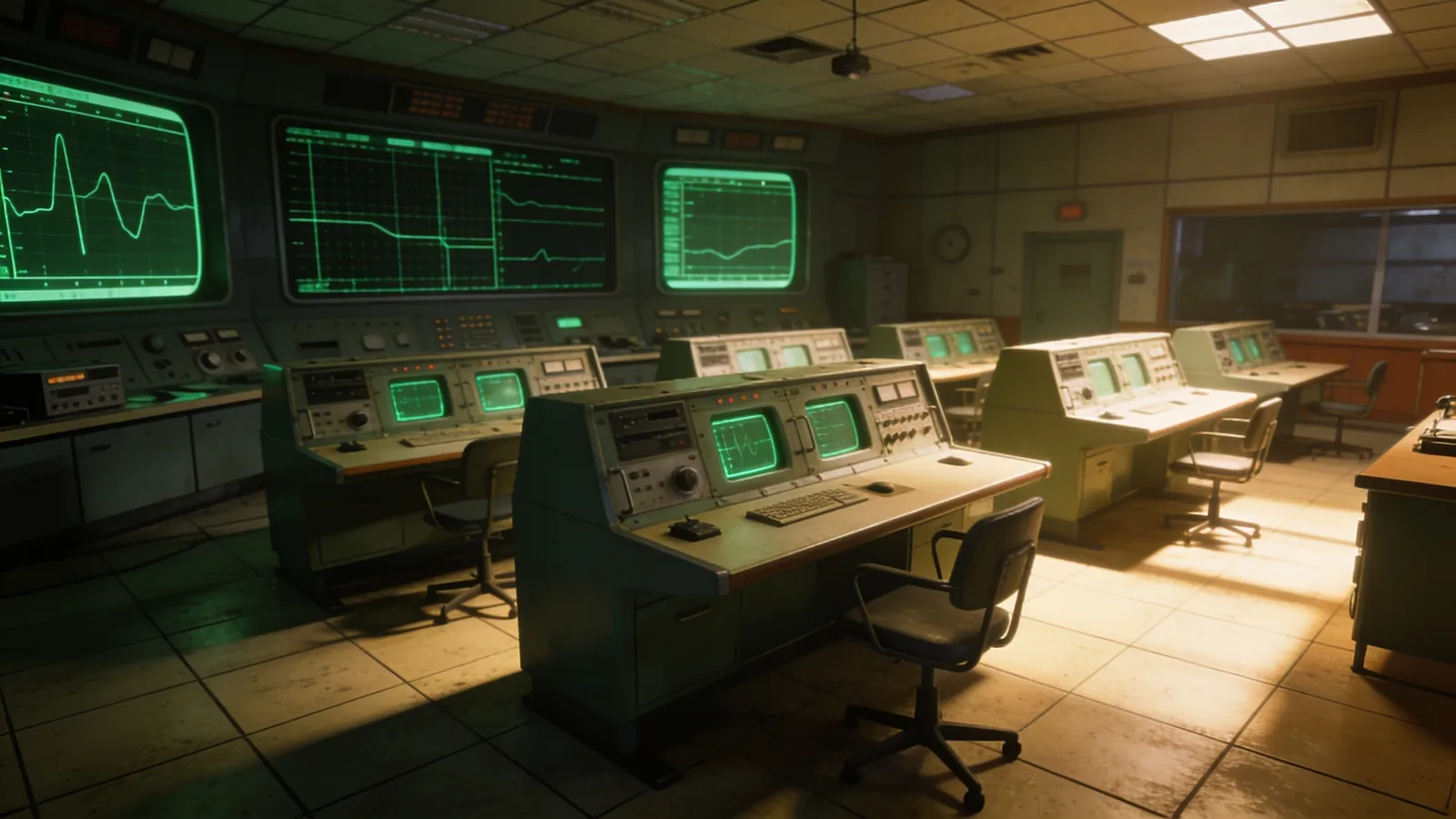
Apollo 13 is the right case for principles because it contains both a failure story and a recovery story, and they are different stories. Everything in this section comes from NASA's history article and the NASA copy of the Apollo 13 Review Board report, which I read on 2026-11-21. Nobody died on this mission, and I want to keep it that way in how I tell it: this is a story about a hard problem and the people who solved it.

What happened. The accident was on April 13, 1970, about 55 hours and 55 minutes into the flight, in oxygen tank No. 2. The crew used the Lunar Module as a lifeboat and splashed down in the Pacific on April 17. Apollo 14 slipped from October 1970 to January 1971.
What the Review Board found. The board's chair said the accident was not the result of a chance malfunction in a statistical sense, but of an unusual combination of mistakes. The record shows a chain, not a single event. The tank was removed in October 1968 for design changes, was dropped about two inches during handling and was reinstalled in November 1968. During the countdown test on March 25, 1970, tank No. 2 emptied only about 8 percent. The heaters were run on 65-volt ground power while the thermostat switches were rated for 28 volts. The tank was not replaced.
What the board recommended. After a hearing on June 16, 1970, the recommendations included a redesign and recertification of the oxygen storage system, a review of all Apollo cryogenic oxygen systems, anomaly reviews that include the complete history of the components, and stronger management and organizational structures.
Reading Apollo 13 through the six questions
My reading, labelled as mine, of what each principle shows.
- Embed quality. A component with a history that includes a drop and an unusual test result, and which then goes on to fly, is a quality question asked too late. The record of what happened to the part did not stop it.
- Lead accountably. The Review Board's recommendation of stronger management and organizational structures speaks to who answers for a part's history.
- Adopt a holistic view. A heater, a thermostat switch, a ground power supply and a tank are four things owned by different people. The failure lived in the gaps between them.
- Build empowered teams. The recovery is the opposite story: a team given a clear goal and the authority to work the problem, using the Lunar Module as a lifeboat. I do not have the details of the return burns from a source I could read, so I will not describe them.
- Focus on value. The value in the second half was simple and non-negotiable: bring the crew home.
What this means for how you read the rest
The principles are not a seventh domain and they are not a chapter of the Guide that you can skip once you have passed the exam. They are the lens. When you read the scope chapter, you will ask whether the scope serves value. When you read the risk chapter, you will ask about the holistic view. In the resources chapter you will ask about empowered teams.
I find it useful to keep one more thing in mind: when you are lost, go back to the six questions. The question you do not want to answer is usually the one you should ask first.

Try it: which principle is weakest this week?
The tool below asks six yes-or-no questions about your project and points at the one that needs attention first. It runs in your browser and saves nothing outside it.
Where this connects
The principles show up in articles you may already know on this site. Value and scope meet in how to stop scope creep and in the business case and charter. Quality belongs to the project management plan guide and to lean project management. Accountability is the heart of the RACI chart guide. The holistic view is what the stakeholder map trains. For the team principle, see the people side of change. For risk and what a good record looks like, read the risk register for a small business and project risk management in plain English. To see what a lessons log looks like, try the lessons learned template, and for data that people can trust, data-driven project management.
How it connects
Same problem, other angle: articles on this site
Processes on the map this chapter touches
Make it stick
A picture, a phrase and a flip card do more for memory than a second read. Spend two minutes here.
Memory hook
Happy Vets Quietly Lead Sleepy Elephants
H-V-Q-L-S-E: Holistic, Value, Quality, Lead accountably, Sustainability, Empowered.
Try this. Picture a grinning vet in a bright raincoat tiptoeing at the head of a line of sleepy elephants. Each elephant wears a blanket with one letter on it.
Flip cards: say the answer out loud before you flip
Practice questions
Teach it back
Pick the principle you fail most on your own project, and tell a friend what you would change on Monday.
Where you get stuck is the exact paragraph to read again. Come back in three days: the 5-minute review will have these questions ready.
What to do next
If you have ten minutes, use the tool above and pick the weakest principle. If you have an hour, read the next chapter on the map. If you are in the middle of a project that is stuck, the two-minute diagnostic shows which engine to fix first.
Frequently asked questions
What are the six principles of PMBOK 8?
PMI's page for the Eighth Edition lists them as adopting a holistic view, focusing on value, embedding quality, leading accountably, integrating sustainability and building empowered teams. The plain-English questions in this chapter are my own reading.
Do I need to memorize the principles for an exam?
Learn what each one is about and recognize the symptom of a project that is ignoring it. PMI says the core principles and approaches of the PMP exam have not changed, and the exam content outline is the document that defines what is tested.
How many principles did the 7th edition have?
Twelve, and eight performance domains. The Eighth Edition keeps the same foundation but trims it to six principles and seven domains, according to PMI's page and public summaries.
Is the Apollo 13 account complete?
No. It is a short reading from NASA's history article and the Review Board report. I did not read the parts about the return burns, so I do not describe them. I handle the case with respect because it was a very serious event.
Sources and what they support
- PMI: PMBOK Guide, Eighth Edition page Read 2026-11-22. names of the six principles and seven domains; the retained foundation; tailoring; a structure that connects principles, domains and focus areas.
- NASA: 50 years ago, the Apollo 13 Review Board report Read 2026-11-21. the accident date, the Review Board's conclusion, its recommendations of June 16, 1970, the lifeboat recovery, the splashdown and the slip of Apollo 14.
- NSSDC: Apollo 13 Review Board report (text) Read 2026-11-21. the history of tank No. 2 in 1968 and the March 25, 1970 countdown test, and the 65-volt and 28-volt detail.
- Ricardo Vargas Read . his process flow helped me organize the information so it could be digested.